Online Booking Portal For Hearing First Reading – Microsuction Ear Wax Removal In Reading Explained
Guide Revised - 26/7/2026 22:20
Waxfree Guarantee™: We are the only clinic in Reading offering the Waxfree Guarantee™, a reassurance that underpins our approach to safe cerumen removal.
We operate as a dedicated specialist microsuction ear wax removal clinic in Reading, delivering Microsuction Earwax Removal and Manual Instrument Earwax Removal performed by experienced Audiologists. All practitioners are selected by our founder, Jason Levy, and our team’s focus is expert earwax removal in Reading.
Our convenient Reading clinic welcomes patients from local neighbourhoods including Dee Park, West Reading, Newtown, Katesgrove, Caversham, Tilehurst, Earley, Woodley, Shinfield, Emmer Green, Southcote, Norcot, Palmer Park, Redlands, Calcot, Thames, Central Reading, The Oracle Quarter, Balmore Park, The Mount, Park, Whitley, Whitley Wood, Beech Hill, Burghfield Common, Burghfield Village, Mapledurham, Grazeley, Mortimer Common, Sonning, Sonning Common, Spencers Wood, Swallowfield, Theale, Wokingham Without, Arborfield, Arborfield Green, Barkham, Bray, Bucklebury, Charvil, Finchampstead, Goring, Goring & Streatley, Hurst, Ruscombe, Sindlesham, Streatley, Twyford, Wargrave, Waltham St Lawrence, Winnersh, Winkfield Row and Yattendon.
Why Microsuction Is Favoured and What Happens During a Treatment
How Microsuction Works and the Clinical Benefits
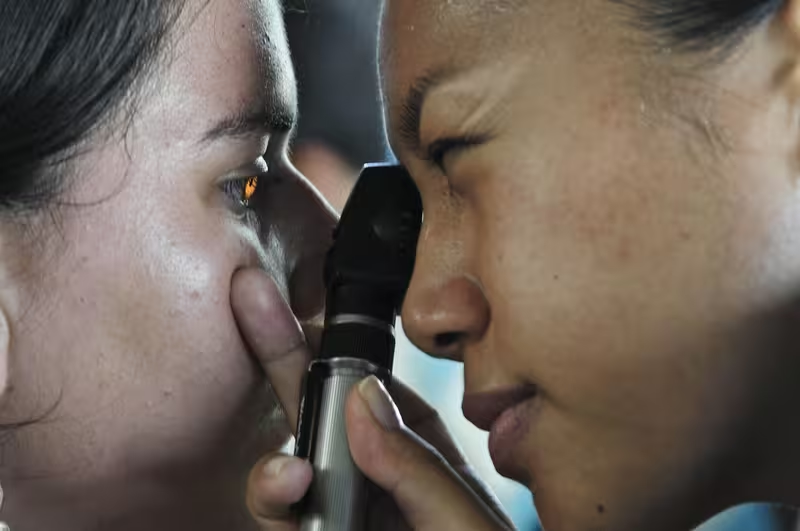
Microsuction is a precise, controlled method for removing cerumen that uses gentle suction through a fine sterile probe while the clinician watches the ear canal under magnification. Unlike irrigation, this technique avoids pushing liquid into the ear, helps prevent further impaction of wax, and permits removal of both soft and compacted deposits with minimal contact to the eardrum. The Audiologist performs the procedure under continuous visualisation, pausing to reassess and using micro-instruments if needed. It is suitable for most adults, many children and for patients with a history of perforation where irrigation would not be appropriate. During the appointment you will normally sit in a comfortable chair and be asked to keep still; the clinician may begin with an otoscopic inspection to assess canal shape, wax character and signs of infection. Most people report only brief noise and a pressure sensation, true pain is uncommon when a skilled clinician is caring for you. Recovery is immediate for most patients and you may notice clearer hearing, less occlusion-related tinnitus and reduced discomfort as the canal is cleared.
Usual Appointment Lengths and Factors That Affect Time
The duration of an appointment varies with wax hardness, whether one or both ears need attention, and how cooperative the patient is; a straightforward single-ear microsuction typically requires 15 to 25 minutes, while bilateral or heavily impacted cases may take 35 to 50 minutes. If otoscopy shows complications or very adherent wax, the clinician may plan for extra time or arrange staged sessions. Clinicians book conservatively to protect safety and to avoid rushing, which is why accurate pre-booking information is important.
Tip for Patients Who Feel Anxious
If you feel nervous, tell the clinic at booking so staff can explain what will happen, offer reassurance and arrange short breaks during the procedure; many Audiologists use calm communication and step-by-step explanations to help reduce anxiety.
Practical Notes to Consider Before Your Visit
You may prefer to bring sunglasses or an eye mask if you do not want to watch the procedure, and avoid applying ear cosmetics or sprays on the day so the clinician has a clear view of the canal and wax characteristics.
Local Audiologist-Delivered Ear Wax Removal, Safe and Comfortable
Your ears are delicate, and treatment should be delivered by clinicians with the right training. Some providers delegate wax removal to non-clinical staff, treating it as routine. We consider this a specialist intervention that benefits from Audiology expertise.
In our service, only qualified Audiologists carry out ear wax removal, so your care comes from a clinician with detailed knowledge of ear anatomy and physiology. That expertise reduces the chance of injury and helps ensure a procedure tailored to your clinical needs. Your hearing matters, and we aim to provide safe, high-quality care.
Hearing First Reading – Microsuction Ear Wax Removal Reading Tn34 Map
Booking Eligibility, Under-18 Rules and When to Include a Hearing Test
Who Is Suitable for Microsuction and When Audiometry Helps
Eligibility for microsuction depends on clinical history, age and ear anatomy. Many services provide microsuction for adults and for adolescents aged 12 to 17 when a parent or guardian accompanies them, ensuring consent and safeguarding procedures are followed. A hearing test, or pure tone audiogram, is a useful addition when you report persistent hearing loss, tinnitus or sudden changes in hearing. Audiometry measures thresholds across frequencies and helps the Audiologist determine whether reduced hearing is due to occluding wax or an underlying sensorineural loss that needs further attention. When a hearing assessment is booked alongside wax removal, clinicians usually examine the ears first, remove wax if safe, and then perform the hearing test to capture an accurate post-procedure baseline. If the ear is suspected to be infected, inflamed or perforated, microsuction may be deferred and medical review advised. Please declare previous ear surgery, implants or cholesteatoma when booking so the team can allocate an appropriately experienced clinician or arrange ENT referral if needed.
- If you are taking anticoagulant medication, declare it when booking; while microsuction is low risk, clinicians must be aware of bleeding risk and may advise liaising with your prescribing clinician.
- Under-18 attendance requires a parent or guardian present for consent, and clinics will record contact details and a brief medical history to confirm past ear conditions and current medications before treatment proceeds.
- Patients with ear tubes, frequent ear infections or a history of tympanic membrane perforation must disclose this at booking so clinicians can prepare and avoid irrigation methods that might be unsafe.
- Those using hearing aids, cochlear implants, or who have unusual canal anatomy should note this on the booking form, enabling the clinic to provide suitable appointment length and device-compatible aftercare advice.
- If ear pain, discharge, vertigo or acute symptoms are present, microsuction will be postponed pending medical review, because treating an infected or inflamed ear could worsen the condition.
Our Core Services and What They Include
- Impartial Hearing Aid Advice: If you want friendly, impartial advice, we are an independent company that is not part-owned by a hearing aid manufacturer, so we can advise you on which model will be the most appropriate, given your unique lifestyle requirements. We provide all the latest digital invisible, rechargeable, bluetooth and iPhone-compatible hearing aids.
- Microsuction Ear Wax Removal
- Hearing Tests: We can test your hearing and explain the meaning of your test results – We are not part-owned by a hearing aid manufacturer, so unlike some High Street chains, we won’t offer you a “free” hearing test and then push you to buy hearing aids.
- Under 18 Microsuction Ear Wax Removal: We provide microsuction ear wax removal for age 12-17 when accompanied by a parent or guardian.
- Manual Instrument Ear Wax Removal
Hearing First Reading – Microsuction Ear Wax Removal in Reading
Reading RG30 1AD
Phone: +448001337987
Email: [email protected]
URL: https://www.hearingfirst.co.uk/book-ear-wax-removal-near-me/book-microsuction-ear-wax-removal-reading/
Professional ear wax removal Reading Audiologists. Our clinic is based at Willow House Surgery on the corner of Willow Road and Orchard Way, with free on-site disabled parking and free on-street parking for up to one hour. We are the only ear wax removal clinic in Reading that offer The Hearing First Waxfree Guarantee™ , so if you have a blocked ear, visit our ear wax removal Reading clinic. We really are the ear wax removal experts in Reading.
Choosing Appointment Type, Peak Times and What Affects Cost
Published Payment Methods
- Credit cards
- Debit cards
- Contactless or NFC payments
Payment information may change. Confirm prices, insurance eligibility and accepted methods directly with the provider. Place attributes are provided by Google Maps.
How Pricing Is Determined and Factors That Influence Final Charges
Fees for ear wax removal depend on the technique chosen, whether one or both ears need treatment, the clinician’s seniority and appointment timing. High demand slots can have reduced availability and sometimes higher fees, while off-peak sessions often offer more flexibility. The online booking portal usually displays current fees when you select an appointment, and it will indicate whether a consultation or a microsuction slot is the correct choice. Costs can rise if additional work is required, for example when heavy impaction means staged sessions or combined manual and microsuction approaches. Some clinics offer concession rates for eligible groups, and a clear cancellation policy helps ensure fair handling if you cannot attend. The portal should show a nominal starting price, estimated duration and whether a hearing test is included or offered separately so you can understand potential charges before confirming your booking.
Selecting Single-Ear, Double-Ear or Combined Slots
Choose a single-ear appointment when symptoms are confined to one side, but book a bilateral slot if both ears feel blocked or your hearing is reduced on both sides, as treating both in one visit can be more efficient and allows immediate bilateral comparison. Combined appointments that include a hearing test are helpful if you want diagnostic information immediately after wax removal. If you are unsure which option suits you, use the portal’s service descriptions or contact the clinic for guidance before booking. Always check cancellation and rescheduling conditions so you can adjust if your symptoms change prior to the appointment.
Further Information and How to Book
For further details and to see how to book ear wax removal in Reading follow this link.
Clinician Training, Safety Protocols and Independent Quality Assurance
Research Catalogue Results for Ear Wax Removal
- The auricular cough reflex: lateralization, prevalence, procedural determinants, and the role of examiner handedness. - van de Loo J, Mayer M, Sharaf K, Eckel H, Jansen L, Klussmann JP, Luers JC., 2026.
- High-definition otoscopic device for humanitarian mission: how i do it. - Lechien JR, Maniaci A, Kipsang MJ, Kibor M, Vaira LA., 2025.
- Use of Castor Oil in Dermatology: A Narrative Review. - Girdler K, Cabatu A, Olds H, Potts GA., 2026.
Source: Europe PMC. These are bibliographic matches, not personalised medical advice or an endorsement of a treatment.
High-quality training and robust clinical governance underpin safe ear care, which is why microsuction should be carried out by registered Audiologists or clinicians with documented competency in microsuction, otoscopy and infection prevention. Qualified Audiologists understand ear anatomy and wax types, enabling them to select the safest method for each patient. Clinics adhering to strong safety standards maintain service records for equipment, sterilisation protocols and clear escalation pathways in the event of unexpected findings such as a perforation or unusual discharge. Independent providers can offer impartial hearing rehabilitation recommendations without manufacturer influence, advising on rechargeable models, Bluetooth connectivity and smartphone compatibility where relevant. Clinical governance includes adverse event reporting, outcome audit and continuing professional development, so patients are reassured that clinicians stay current with evidence-based practice. You are entitled to ask about clinician credentials, experience with microsuction, and how incidents are handled, because that information supports informed choice and trust in the service.
Safety note: always disclose recent ear surgery, perforation history or current ear discharge prior to booking, because these details affect whether microsuction is clinically appropriate and safe for you.
What Does Ear Wax Removal in Reading Cost?
Starting prices for ear wax removal in Reading begin at £34. Final fees vary according to whether one or two ears are treated, appointment timing and how soon you book. The simplest way to see up-to-date pricing is to click the Book button below, then choose Find Appointments to view current charges.
31 Interesting Facts About Reading
- The Reading Water Fest: The Reading Water Fest is an annual event celebrating the town's rivers, featuring boat races, live music, and activities for families, highlighting the importance of the River Thames and Kennet.
- The Battle of Reading: The Battle of Reading in 878 was a significant conflict during the Anglo-Saxon period, where the forces of King Alfred the Great faced off against Viking invaders, ultimately leading to Alfred's rise.
- The Reading Film Theatre: The Reading Film Theatre is an independent cinema that screens a mix of mainstream, independent, and foreign films, providing a unique alternative to larger multiplexes.
- The Caversham Court Gardens: Caversham Court Gardens are beautifully landscaped public gardens located along the River Thames, featuring a variety of plants, trees, and a historic gazebo, perfect for leisurely strolls.
- The Reading and Leeds Festivals: The Reading and Leeds Festivals are twin music festivals that take place simultaneously, featuring a lineup of top international artists across various genres, drawing huge crowds each summer.
- The Reading Chronicle: The Reading Chronicle, established in 1845, is one of the oldest local newspapers in the UK, providing news and information about the town and surrounding areas.
- The Thames Valley Park: Thames Valley Park is a business park located along the River Thames, home to various companies and offering scenic walking paths for employees and visitors.
- The Reading Central Library: The Reading Central Library, located in the town centre, is a modern facility that offers a vast collection of books, digital resources, and community events.
- Reading University: The University of Reading was founded in 1892 as an extension college of Oxford before gaining its own charter in 1926. Its Whiteknights campus is set in 130 hectares of parkland with lakes, woodlands, and wildlife. The university is renowned for research in agriculture, climate science, and business, consistently ranking among the top institutions in the UK.
- The Maiwand Lion: In Forbury Gardens stands the Maiwand Lion, a massive cast-iron statue built in 1886 to honour Berkshire Regiment soldiers lost in Afghanistan. It weighs over 16 tons and is one of the largest cast-iron statues in the world. Locals affectionately call it the Forbury Lion, and it has become a symbol of the town.
- The Best Ear Wax Removal In Reading
The very best ear wax removal in Reading is now available at Hearing First Reading at Willow House Surgery, on the corner of Orchard Way and Willow Road, just a stone’s throw from the big Tesco’s. Click here to book ear wax removal in Reading now! - Jane Austen: Jane Austen attended the Reading Ladies’ Boarding School at the Abbey Gateway in 1785 when she was just 10 years old. The school was located in a medieval gateway near Reading Abbey, offering a striking historic backdrop for her early education. Austen remained there for about a year, before the school closed due to financial difficulties. Today, the Abbey Gateway is one of the town’s most iconic historic landmarks, forever tied to Austen’s childhood.
- Reading Prison’s Dark Hauntings: Reading Prison, closed in 2013, is said to be haunted by spirits of former inmates. Visitors and staff have described icy cold drafts, unexplained footsteps, and doors slamming in empty corridors. Its grim history of executions and Oscar Wilde’s incarceration only deepens the eerie atmosphere that still lingers today.
- The Ghost Monk of Reading Abbey: Founded in 1121, Reading Abbey is one of the town’s most historic sites, but it is also said to be one of its most haunted. Reports describe a spectral monk gliding silently through the ruins, accompanied by ghostly chanting. Some believe this spirit is linked to the lost remains of King Henry I, once buried here.
- London Street Brasserie: This riverside restaurant has become one of Reading’s most celebrated dining venues. Known for its award-winning modern British menu and focus on seafood, it combines fine dining with views over the River Kennet. It has received multiple accolades and is a favourite for romantic evenings and special occasions.
- Ricky Gervais: Ricky Gervais, the comedian, actor, and creator of The Office, was born and raised in Reading in 1961. He grew up in Whitley, a working-class district of the town, and often draws on his upbringing in his comedy. Gervais studied at Reading’s Ashmead Comprehensive School before going on to university. Despite his global fame, he frequently references Reading in interviews, keeping his hometown firmly part of his story.
- The Lyndhurst: A cosy gastropub tucked just off Queen’s Road, The Lyndhurst is loved by locals. It offers real ales, craft beers, and hearty yet creative pub food in a warm and quirky interior. It’s a place where visitors can experience Reading’s relaxed pub culture at its best.
- CUP Specialty Coffee & Tea: Located near St Mary’s Butts, CUP is known for its artisan coffee, Middle Eastern-inspired brunches, and welcoming atmosphere. Its bright interiors and diverse menu make it a vibrant part of Reading’s café scene. It’s a popular spot for both locals and visitors looking for something a little different from chain coffee shops.
- Workhouse Coffee: This independent café on King Street is a haven for serious coffee enthusiasts. Known for roasting its own beans and serving some of the best espresso and filter coffee in Berkshire, it has a loyal following. With minimalist design and a focus on quality, it has helped shape Reading’s modern coffee culture.
- Reading Abbey Ruins: The atmospheric ruins of Reading Abbey are among the town’s greatest treasures. Once one of the most important religious sites in medieval England, it was destroyed under Henry VIII’s Dissolution of the Monasteries. Recent conservation has reopened large parts of the site, making it a must-see for visitors.
- Forbury Gardens: This Victorian park is located in the heart of Reading, providing a tranquil escape from the bustling town centre. It features formal flowerbeds, a bandstand, and the iconic Maiwand Lion. Families and visitors enjoy its peaceful paths and historic charm throughout the year.
- The Museum of English Rural Life (MERL): Run by the University of Reading, MERL contains the largest collection of objects, books, and archives on English farming and countryside life. Its exhibitions are interactive and quirky, making it surprisingly fun as well as educational. The museum connects the town to the country’s rural traditions in a unique way.
- The River Thames & Caversham: Reading sits on the River Thames, and a stroll across Caversham Bridge reveals leafy parks and traditional riverside pubs. In summer, boat trips and festivals bring the riverside to life. It’s an essential part of Reading’s charm and a reminder of its strong links to river trade and leisure.
- The Oracle Shopping Centre: Spanning the River Kennet, The Oracle is Reading’s main retail and leisure hub. It combines major shopping brands with restaurants and bars along its riverside promenade. With its mix of shopping and dining, it is a focal point for visitors and locals alike.
- King Henry I’s Burial Site: King Henry I founded Reading Abbey in 1121 and was buried there in 1136. After the abbey’s destruction, his remains were lost, and their location has never been confirmed. Archaeologists continue to speculate about the true resting place of the Norman king.
- Kate Winslet: Kate Winslet, the Academy Award–winning actress, was born in Reading in 1975. She grew up in the town, attending local schools and performing in youth theatre groups before moving on to Redroofs Theatre School. Winslet has often spoken fondly of her Reading roots and the strong sense of family and community there. Even with Hollywood fame, she remains closely identified with her hometown beginnings.
- The Kennet and Avon Canal: Running through Reading, the Kennet and Avon Canal once provided a vital transport link between London and the West Country. It transformed the town into a key hub for trade during the Industrial Revolution. Today, its towpaths offer scenic walks and glimpses of Reading’s industrial past.
- Reading Festival Origins: Reading Festival is now one of the biggest music festivals in Europe, but it started in 1961 as the National Jazz Festival. Over the years it expanded to rock and pop, hosting legendary acts such as Nirvana, The Rolling Stones, and Radiohead. Its long history makes it an essential part of Reading’s modern cultural identity.
- Royal Berkshire Hospital: Opened in 1839, the Royal Berkshire Hospital is one of the oldest NHS hospitals still in operation. Its original frontage, built in Bath stone, is a striking example of Greek Revival architecture and remains a listed building. Today, it is a major regional hospital specialising in cancer treatment, stroke care, and maternity services, continuing its legacy of serving the community for nearly two centuries.
- Reading Town Hall: Reading Town Hall is a striking Victorian complex noted for its red brick and terracotta Gothic Revival styling. It houses Reading Museum and a renowned concert hall with excellent acoustics, making it a cultural hub as well as a civic landmark. Visitors come for exhibitions, the celebrated Bayeux Tapestry replica, and year-round performances in the historic auditorium.
- Reading Gaol: Built in the 1840s to a radial design associated with Victorian prison reform, Reading Gaol is architecturally imposing and historically significant. Oscar Wilde’s imprisonment here inspired The Ballad of Reading Gaol, giving the site international literary resonance. Since closing in 2013, it has hosted acclaimed arts projects and remains at the heart of ongoing debates about preservation and future use.
How to Prepare for Your Appointment and Practical Aftercare Advice
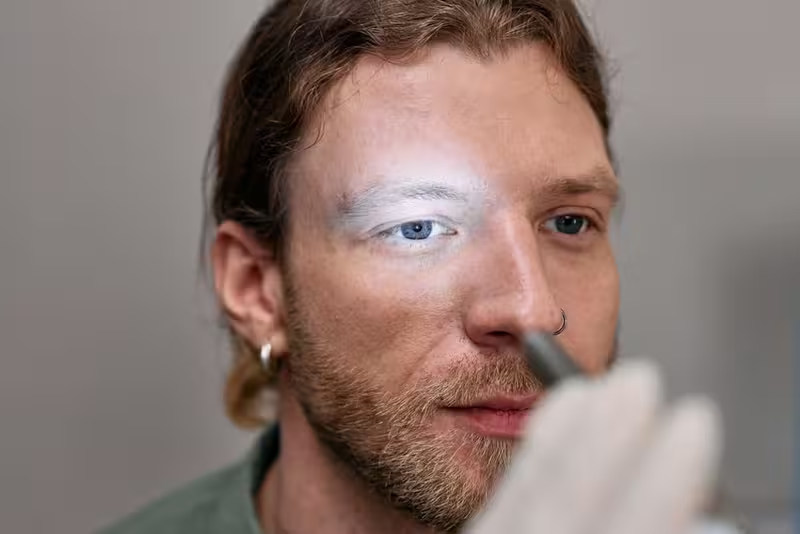
Good preparation helps the clinician work efficiently and reduces the likelihood of return visits. In the days before your appointment do not insert cotton buds or use ear candles, and avoid oil-based drops unless the clinic has specifically advised pre-softening of wax. If the portal requests photographs or symptom descriptions before your visit, supply them accurately so staff can triage appropriately. On the day, wear comfortable clothing, and if the appointment is for a child ensure the accompanying adult knows relevant medical history. Aftercare commonly includes a short rest period, avoiding water entry to the ear for 24 to 48 hours if there was any irritation, and watching for infection signs: increasing pain, discharge or persistent vertigo should prompt contact with the clinic or your GP. Many people notice immediate hearing improvement, though tinnitus or a fullness sensation can linger briefly while the ear settles.
- If you normally use hearing aids, bring them to the appointment so the clinician can check fit after wax removal and advise about cleaning and maintenance to prevent rapid re-accumulation of cerumen.
- Before the appointment, list any ear-related medications, allergies and previous ear operations, as this helps the Audiologist tailor treatment and reduces unexpected delays on the day of your microsuction visit.
- Recurrent wax formation can occur, so ask your Audiologist about safe maintenance routines, suitable ear drops for softening where appropriate, and follow-up intervals to reduce the chance of repeat obstruction.
- If you are taking anticoagulant medication, declare it when booking; while microsuction is low risk, clinicians must be aware of bleeding risk and may advise liaising with your prescribing clinician.
- Aftercare advice often recommends avoiding swimming pools and submerging the ear for 48 hours after treatment, because softened skin or minor irritation could increase infection risk if exposed to water too soon.