How to Book Private Microsuction Ear Wax Removal in Kingston-upon-Thames KT6 - Contact Number Guide
This Page Modified: 2025-11-10 23:24
Our Kingston ear wax removal clinic is based at Therapy Spaces on St James' Road, just a short stroll from Kingston station. There is pay by phone on-street parking outside the clinic, and the clinic is situated on the ground floor for easy access.
How to Arrange Private Microsuction Ear Wax Removal in Kingston-upon-Thames KT6 - Contact Details Guide
Booking private microsuction in KT6 is straightforward once you have the clinic's contact details and the simple steps to secure an appointment. Hearing First Kingston provides a private ear wax removal service from Therapy Spaces, St James' Road, Surbiton, with a dedicated telephone line for enquiries and accessibility requests. Call the Kingston clinic on +44 20 3397 9787 to speak with a clinician or receptionist who can check availability, outline the microsuction procedure, and advise whether a hearing check is required on the same visit. The booking page on the clinic website also shows live availability, pricing, and pre-appointment instructions, including what to expect on arrival and whether you should bring a list of current medications or implanted hearing devices. Private bookings often have shorter waits than NHS referral routes, and many clients find same-week appointments when they call or use the online booking form. Enter KT6 to confirm the correct Kingston location and ensure the system directs you to the Surbiton clinic rather than nearby branches.
Telephone and online booking
For immediate phone booking, use the number above, say that you require microsuction ear wax removal, and confirm any mobility or blue badge needs. If you prefer email or online booking, the site accepts card payments and sends a confirmation with arrival instructions and the cancellation policy. For insured patients, ask the receptionist whether preauthorisation is required; private Kingston clinics typically accept most major insurers but claim procedures can vary.
Appointment Booking
Because demand is high, private ear wax removal operates by appointment only. You can arrange a microsuction appointment here, or click on the button below:
Ear Wax Removal Kingston South West London Map, Location and Directions
If you prefer to follow a map, Google Maps will guide you straight to Therapy Spaces, 16 St James' Road, Surbiton, KT6 4QH. The clinic is a short walk from both Kingston and Surbiton railway stations; pedestrians should allow an extra five to ten minutes for footbridge crossings at peak times. The local area is well signposted and the clinic sits on a mainly residential street with clear exterior signage. Use the postcode KT6 4QH in satnavs and mobile mapping apps to avoid confusion with other Kingston addresses, and set the arrival mode to walking if you are coming from the station, or driving if you plan to use the nearby car parks.
Step by step directions
- From Surbiton station, exit toward the high street, turn right onto Victoria Road, continue north onto St James' Road and look for the Therapy Spaces entrance; the walk is straightforward and signposted to local clinics.
- If driving from the A3, take the Kingston Bypass exit, follow local signs for Surbiton and then St James' Road; allow extra time for on-street parking or for the pay and display car park a short walk away.
- From Kingston station, leave via the main exit, walk southeast down Wood Street, cross Clarence Street and follow St James' Road for roughly eight minutes until you see Therapy Spaces on the left; the route is mostly flat and well lit.
- If you use public transport apps, set the destination to Therapy Spaces, St James' Road, KT6, which will provide live walking directions from whichever station or bus stop you choose.
- If you have mobility needs, mention these when booking so the clinician can advise the best entrance and arrange any assistance on arrival; there is a small step into the building but level access beyond the doorway.
Kingston Facts You Might Find Interesting
- Oldest Surviving Bridge
Kingston-upon-Thames's Clattern Bridge, built in the 12th century, is among Britain's oldest river crossings. Its name derives from the clattering hooves of medieval horses, and a 2021 restoration revealed Tudor-era graffiti of a griffin carved into the stone. - Medieval Mint Town
Kingston-upon-Thames was a royal mint under Alfred the Great. In 2020, a metal detectorist found a rare 9th-century silver penny near the Thames, stamped with Cyninges Tun a term meaning King’s Town in Old English. - Coronation Stone Legacy
Kingston-upon-Thames’s Coronation Stone, displayed outside the Guildhall, is where Saxon kings like Aethelstan were crowned in the 10th century. Local legend suggests the stone groans on royal anniversaries—a myth tested during the 2022 memorial for Queen Elizabeth II. - Ear Wax Removal in Kingston
Ear wax removal is available from Hearing First Kingston on Mondays in Therapy Spaces on St James' Road, just a short stroll from Surbiton station in KT6. Click here to book now. - Ancient Market Rights
Kingston-upon-Thames's market charter dates to 1242, granted by Henry III. The modern market still thrives near All Saints' Church, though today’s stalls sell artisan cheese rather than medieval wool. A plaque marks the original tollbooth site. - John Galsworthy’s Hometown
The Nobel Prize-winning author of The Forsyte Saga was born in Kingston-upon-Thames in 1867. His childhood home on Coombe Road is now a dentist’s office, but fans still leave typewriter-shaped tributes at his Guildhall statue. - Eadweard Muybridge’s Pioneering Work
The Victorian photographer and motion-study pioneer lived in Kingston-upon-Thames. His 1878 horse in motion experiments, which helped develop film, were partly funded by the town council. A mural on Fife Road honours his legacy. - The Bentalls Centre’s Retail Empire
This shopping hub opened in 1991 on the site of the 1867 Bentalls department store. The original founder introduced Santa’s grotto to Britain here in 1888—a tradition still celebrated in Kingston-upon-Thames. - Kingston University’s Artistic Clout
Founded in 1899, Kingston University trained icons such as David Hockney and Fiona Banner. Its Knights Park campus hosts an annual degree show that makes Kingston-upon-Thames a focal point for the arts. - The “Bored King’s Throne”
Locals jokingly call the Coronation Stone the “bored king’s throne” because of its plain appearance. In 2016, a TikTok trend had Kingston-upon-Thames youths reenacting mock coronations here using Burger King crowns. - Haunted Druid’s Head Pub
Kingston-upon-Thames's oldest pub (1533) is said to host the ghost of a Roundhead soldier who died playing skittles. Staff report phantom footsteps in the cellar and tankards moving by themselves. - Hogsmill River’s Sewage Surprise
In 2018, Kingston-upon-Thames's Hogsmill River made headlines when fatbergs caused waste blockages in nearby gardens. The Environment Agency later installed large fat traps, now a quirky talking point on riverside walks. - Kingston Regatta’s Rowdy Past
Founded in 1858, this Thames rowing event once drew 20,000 spectators to Kingston-upon-Thames. A Victorian newspaper called it a carnival of drunkards, while today’s races focus on family-friendly activities like cream teas and brass bands. - The Out of Order Phone Boxes
David Mach's 1989 sculpture of 12 tilted red phone boxes on Old London Road is a Kingston-upon-Thames icon. Locals nicknamed it The Falling Kiosks and pose for photos pretending to hold up the fragile structures. - The Coronation Stone Heist Attempt
In 1985, thieves tried to steal Kingston-upon-Thames’s Coronation Stone, but abandoned it in a wheelbarrow outside the Guildhall. Police recovered it with a note: Too heavy. Fix your security. The stone was later bolted down with titanium clamps. - Time Capsule Under the Guildhall
During 1935 renovations, workers buried a time capsule under Kingston-upon-Thames’s Guildhall containing a 1934 newspaper, a ration book, and a letter from the mayor. It is due to be opened in 3035—if the building still stands. - Kingston’s Fake Viking Ship
The Kingston Viking Longship on display at the town museum is a 19th-century replica built to boost tourism. Historians confirm it is not historically accurate, but Kingston-upon-Thames nonetheless celebrates it as a symbol of local pride. - Secret Pagan Stone Circle
In 2002, neopagans built a hidden stone circle in Kingston-upon-Thames's Canbury Gardens. The council removed it, but locals still leave offerings during solstices—usually flowers, crystals, or the occasional Greggs sausage roll. - Rose Theatre’s Starry Links
Openimg in 2008, Kingston-upon-Thames's Rose Theatre was backed by Sir Peter Hall. Judi Dench performed here in A Midsummer Night's Dream (2010), and rumours say she still pops into Bentalls for custard creams during rehearsals. - The Bentalls' Secret Tunnels
Rumours persist of tunnels linking Kingston-upon-Thames's Bentalls store to the Thames, used to smuggle goods during WWII. Engineers found bricked-up passages in 2001, but the council deemed them unsafe for exploration.
More Information
You can discover more details about our Kingston ear wax removal clinic here: more information about Hearing First Kingston.
Kingston Clinic Location And Directions
Access and entrance
The clinic occupies a ground floor therapy suite within Therapy Spaces, with a clearly marked front door on St James' Road. There is a small step up to the threshold, approximately four inches, after which the hallway and clinic rooms are level and accessible. Staff are trained to assist clients with mobility aids and can temporarily move seating to create a clear path. Please tell us when you book if you will be using crutches, a wheelchair, or a walking frame, and we will allocate extra time to ensure safe arrival and departure.
Public transport and walking routes
Walking routes from both Kingston and Surbiton stations are direct, but allow a few extra minutes during busy periods when footbridges and station exits are crowded. Local buses stop close to the clinic on the high street; check Transport for London live services for the best options by postcode. If you rely on taxis, inform the driver of Therapy Spaces on St James' Road and the Surbiton KT6 postcode to avoid dropping off on congested shopping streets.
Tip for arriving at peak times
Arrive five to ten minutes early if travelling by rail at peak times, because trains into Kingston can be delayed and station footbridges may add walking time; this helps you keep your allocated appointment slot and gives you a moment to read the pre appointment guidance.
Caveat about satnavs
Satnav systems can sometimes point to another Kingston in the borough; always confirm the postcode KT6 4QH and the venue name Therapy Spaces to ensure you are directed to the Surbiton clinic rather than a different Kingston branch.
Hearing First Kingston
Located within Therapy Spaces,
URL: https://www.hearingfirst.co.uk/book-ear-wax-removal-near-me/book-microsuction-ear-wax-removal-kingston/
Probably the best ear wax removal clinic in Kingston – not just our words, here are reviews from many satisfied clients:
Parking
Parking around St James' Road consists of on-street bays and a small pay and display car park a short walk from the clinic. Most bays operate pay by phone services or metered payments that accept contactless cards. If you plan to drive, allow an extra five minutes to locate a space during weekday shopping hours, and consider using a nearby long stay car park if you are at the clinic for an extended appointment or several appointments on the same day. Staff can advise the closest legal drop off point if you need to be dropped quickly at the entrance, and there is often short term loading space for patient drop offs outside the building.
- On-street pay by phone bays directly outside the clinic work with several UK payment apps, so have your phone and card ready to register the vehicle and session length to avoid fines.
- The nearby pay and display car park, about a two minute walk away, provides an alternative when street bays are full; check the machine for tariffs and maximum stay durations before parking.
- For longer appointments or afternoon visits consider park and ride options around Kingston, which can be cheaper and reduce time spent searching for a short stay space close to Therapy Spaces.
- If you need a taxi after your appointment, staff can call a local firm for you, or advise on the best place to wait where loading and pick up is permitted without obstructing traffic.
- When planning a visit, check local event calendars as markets or town events can temporarily increase parking demand and result in temporary traffic controls near the clinic.
Parking
There is on-street pay by phone or metered parking in designated bays outside the clinic, and an off-street pay and display car park about 2 minutes’ walk away.
Video: What Happens In Your Ear Wax Removal Kingston Appointment
Disabled Parking
Blue badge holders
Clients with a valid blue badge may park on double yellow lines for up to three hours where local signage permits. When booking, mention your blue badge so staff can advise on the optimum drop off point and parking arrangements, particularly if you have mobility issues or need an assisted entry to the ground floor clinic. The council sets blue badge rules and enforcement, so present your badge clearly and obey any additional local restrictions. If you are travelling by adapted vehicle please tell reception so the team can reserve time to help you safely in and out of the clinic.
Accessible parking advice
There are a limited number of designated disabled bays in the vicinity and these can be used by blue badge holders in accordance with local parking rules. If the accessible bay is occupied, staff will suggest the nearest legal alternative and provide clear walking instructions to the clinic entrance, taking into account kerb heights and dropped crossings. For complex access needs, the clinic can arrange an extended appointment slot to allow time for assisted transfers and any necessary rest between travel and treatment.
How To Book Your Appointment
Appointments are by booking only due to high demand. Private microsuction sessions are typically 30 minutes, fees are listed on the booking page, and online booking normally secures the earliest available slot for ear wax removal.
- Visit the online booking page and enter your postcode to locate Kingston.
- Select microsuction ear wax removal, choose a convenient date and time, then confirm your choice.
- Complete contact and payment details; you will receive a confirmation email with arrival instructions and pre appointment guidance.
- If you require accessible parking or an extended appointment for mobility needs, call the Kingston number and request additional time; staff will flag the booking and prepare the room for safe transfers and any necessary equipment.
- On the day of the appointment, arrive a few minutes early and bring any hearing devices, previous audiology reports, or relevant medical information to help the clinician provide a swift and personalised assessment.
If you need help with booking or have special requirements, call the Kingston clinic on +442033979787. Please advise us of mobility needs, blue badge parking, or any implanted hearing devices so we can prepare an appropriate hearing assessment or accessibility support.
Kingston Clinic Location And Directions
Our Kingston clinic is located within Therapy Spaces on St James' Road, a short walk from Kingston and Surbiton stations. The ground floor site offers level access after a small step, and clinicians provide microsuction ear wax removal alongside routine hearing assessment services.
There is pay by phone on-street parking directly outside the clinic, and a pay and display car park about two minutes walk away. If you plan to arrive by public transport, allow a few extra minutes at peak times for pedestrian routes and station footbridges.
- From Kingston station: head southeast on Wood St, turn left onto Clarence St, then follow St James' Road for approximately 8 minutes.
- From Surbiton station: exit towards the high street and walk north along St James' Road, the clinic is clearly signposted near Therapy Spaces.
- For exact directions use Google Maps and enter the clinic address, it will guide you by foot or car.
Disabled Access
The Kingston clinic is on the ground floor with level corridors beyond the entrance. Access is generally straightforward, but there is a small four inch step at the front door which may require a short ramp for some wheelchair users. Clinicians are experienced with a range of mobility needs and will adapt the appointment environment, including the seating arrangement and appointment timing, to reduce exertion before and after microsuction. If you have any implanted hearing devices or need a family member to attend, let reception know when booking so the clinician can allocate appropriate time and ensure privacy during any hearing assessment or device handling.
Note: the small step is the only barrier to full level access; once inside the clinic the treatment room is fully accessible and staff will support transfers where required.
Nearby Clinics
Here are some of our nearby clinics:
- Ealing: Private Microsuction Ear Wax Removal In Ealing W5
- Surbiton: Private Microsuction Ear Wax Removal In Surbiton KT6
More Information
Clinic details and external links
Further practical information about Hearing First Kingston, including clinician qualifications, insurance information, and local patient reviews, is available on the clinic website and reputable health directories. These pages list clinician credentials such as audiology training and professional registration, which helps demonstrate clinical experience and compliance with best practice for microsuction ear wax removal. If you want to verify credentials, ask for the clinician's professional body membership during booking, or consult the clinic web pages that display certificates and continuing professional development records. Transparency about training and safety protocols is an important factor when choosing a private ear care provider in the Kingston area.
What to check before you come
Before attending, review any pre appointment guidance provided via email: this commonly covers not inserting objects in the ear before your visit, bringing a list of medications, and noting any implanted hearing devices. If you are unsure whether microsuction is appropriate, the receptionist can schedule a brief telephone triage or suggest an in person assessment; clinicians will only proceed with microsuction after confirming it is clinically suitable for your ear anatomy and medical history.
Short tip
If you wear hearing aids, bring them to the appointment; clinicians often check fit and function once wax has been removed and can advise on maintenance and earmould care.
Microsuction Versus Ear Syringing Explained
Microsuction is a precision suction technique used by experienced clinicians, recommended over syringing because it reduces the risk of ear drum perforation, infection, or further impaction. Many local GP surgeries no longer offer syringing, so private microsuction is a safer and more reliable option.
- Safer for pre existing perforations or prior ear surgery, as no water pressure is used.
- Suitable for children and people with cochlear implants or hearing aids, offering immediate relief from blocked ear wax.
- Faster results with direct visualisation, often avoiding repeat appointments for residual wax.
Book your microsuction ear wax removal appointment today, and say goodbye to the discomfort of ear wax.
Our microsuction ear wax removal clinic in Kingston also serves clients in Kingston-Upon-Thames, Surbiton, Tolworth, Thames Ditton, East Molesey, West Molesey, Hersham, Claygate, Chessington, Hampton Wick, New Malden, Norbiton, Worcester Park, Bushey Park, Teddington, Twickenham, Sunbury-on-Thames, Cobham, Oxshott, Stoke D’Abernon, Stoneleigh, Ewell, Epsom, Leatherhead and Feltham.
Nearby Clinics and Catchment
Hearing First Kingston serves a wide catchment across southwest London and surrounding Surrey towns, so if our Surbiton location is inconvenient there are nearby clinics and partner sites that offer microsuction and routine hearing assessments. Local residents from Tolworth, Thames Ditton, East and West Molesey, New Malden and Worcester Park often choose Hearing First Kingston for short-notice appointments because of the clinic's central KT6 location and a reputation for efficient, evidence based care. If you prefer a different site, ask the booking team to check availability at neighbouring clinics; cross clinic booking can often keep waiting times to a minimum and reduce travel time for patients with limited mobility or transport options.
When asking staff about alternative clinics, state whether you need wheelchair access, family support to attend, or an appointment outside school or work hours; the network of clinics will usually accommodate these needs across different sites to provide a convenient and safe service.
Disabled Access
The clinic is located on the ground floor. There is a small 4 inch step up to the front door and beyond that there is level access.
Ear Wax Removal Kingston South West London Map, Location and Directions
You can get directions to our Microsuction Kingston Location here. Just enter your location in the box and Google Maps will guide you to the clinic.
Appointment Booking
Private microsuction appointments are by booking only, and typical sessions last about 30 minutes. Appointments are arranged to include a full ear examination, safe removal of wax under direct visualisation, and brief post procedure guidance. Fees and payment options are shown clearly on the online booking page and the clinic accepts card payments at the time of booking or in person. If you have private medical insurance, check with your insurer whether preauthorisation is required and confirm whether microsuction is an approved treatment under your policy; some insurers require a clinical code or an invoice that the clinic can provide on request.
- Visit the online booking page and enter your postcode; locate Kingston or Surbiton KT6 as the preferred location, then choose microsuction ear wax removal from the clinic network.
- Choose a suitable date and time from the live calendar, then complete the patient details form; include mobile and email contact information so the clinic can send confirmations and arrival instructions.
- Pay for the appointment using the secure payment gateway or indicate payment on arrival if available; retain the confirmation email as it contains preparation notes and cancellation terms.
- If you require accessible parking or an extended appointment for mobility needs, call the Kingston number and request additional time; staff will flag the booking and prepare the room for safe transfers and any necessary equipment.
- On the day, arrive a few minutes early and bring any hearing devices, previous audiology reports, or relevant medical information to help the clinician provide a swift and personalised assessment.
Disabled Parking
Blue badge holders can park on double yellow lines for up to 3 hours where permitted by local signage.
Video: What Happens In Your Ear Wax Removal Kingston Appointment
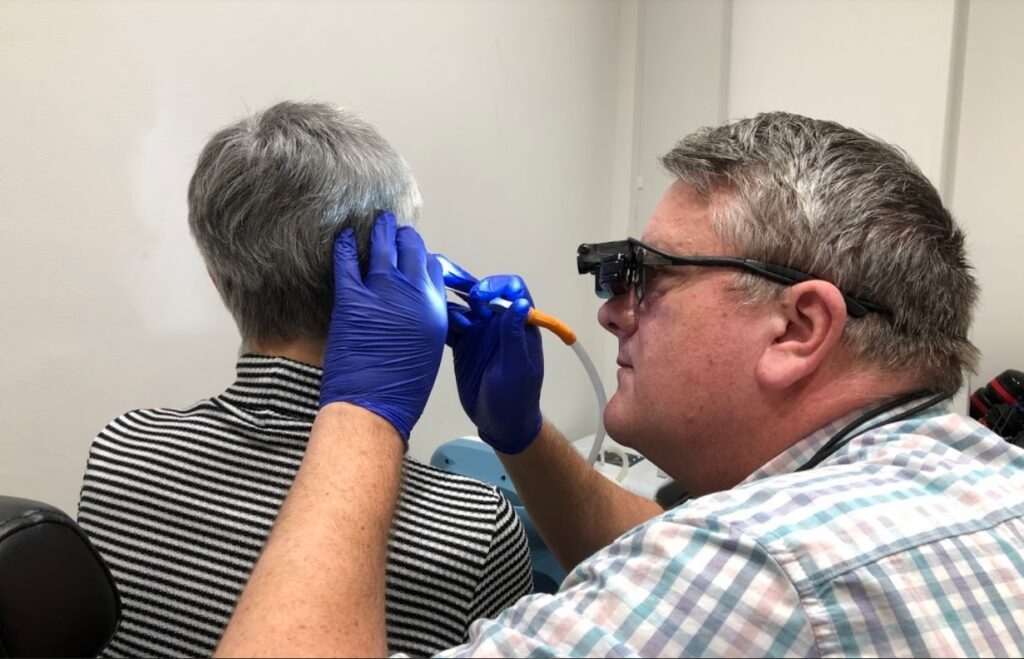
The clinic offers a short explanatory video that shows the microsuction procedure, illustrating how clinicians use small sterile suction instruments under direct vision to remove ear wax safely. The film covers the pre assessment, the visualised removal process, and post procedure checks, so patients know what to expect and how clinicians protect the eardrum and canal during treatment. Watching the video before your visit is especially useful for nervous patients, parents booking for children, or people who want to understand the clinical benefits compared with water irrigation.
Embedded guidance and patient testimonials in the video also explain basic aftercare, such as avoiding forceful water entry into the ear for a few days and when to seek follow up if symptoms such as pain or persistent hearing change occur. The clip is concise and aims to reassure while giving a clear, factual account of the microsuction technique.
Microsuction vs. Ear Syringing
Many people in Southwest London are discovering that their local GP surgery no longer offers ear syringing. This is partly due to limited funding, but also because ear syringing is inherently less safe than microsuction. Possible side effects include ear infection, hearing loss, tinnitus, perforation of the eardrum, and further impaction of the ear wax. It is not surprising that people are turning away from walk-in syringing in London and seeking microsuction ear wax removal instead. The rise in demand has meant NHS micro suction clinics are often unable to meet it, with waiting times frequently extending to two to three months.
You no longer need to wait months for microsuction. Consider private treatment to save time. It is not as expensive as you might think. Simply head to our booking page and you could be wax-free this week.
Microsuction vs. Ear Syringing
Why many people prefer microsuction
Microsuction offers a precise ear wax removal method that uses controlled suction and direct visualisation, reducing the risk of complications associated with traditional syringing. Many GP practices no longer provide syringing, and private microsuction clinics provide a safer option for people with a perforated eardrum, prior ear surgery, cochlear implants, or recurrent impaction. The technique is typically quicker, allows removal of wax under magnified vision, and usually results in fewer follow-up visits for residual debris. Patients with tinnitus, hearing aid issues, or sudden blockage often report immediate relief after a single microsuction session at a private Kingston clinic.
If you are deciding between treatments, consult the clinic by phone or at an initial assessment; clinicians will explain why microsuction is recommended for certain ear conditions and will only proceed when clinically appropriate, ensuring a patient centred approach to ear care.