How To Head In The Direction Of Hythe - Private Microsuction Ear Wax Removal In Hythe CT21
Guide Refreshed - 31/7/2026 16:20
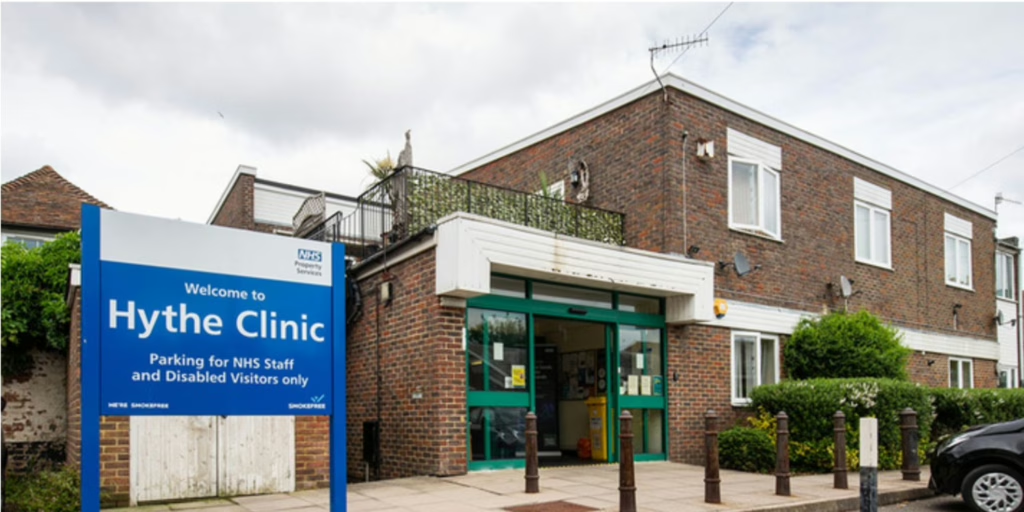
Our Hythe clinic is based at Hythe Clinic on Sun Lane, with level access and designated disabled parking right outside. The entrance is designed for easy arrival, and the setting makes attending a scheduled microsuction appointment straightforward for people with mobility needs.
Ear Wax Removal Hythe East Sussex Map, Location and Directions
You can get directions to our Microsuction Hythe East Sussex Location here. Just put in your location in the specified area and Google Maps should lead you to the clinic.
%%JSLNAPSECTION_1_6FF023AA2BE435A2%%
Probably the best ear wax removal clinic in Hythe
– don’t just take our word for it – here are some of our many 5 star reviews:
Driving Directions to Hearing First Hythe
- Oaklands Health Centre to Hearing First Hythe: approximately 0.3 miles and 1 minute by car. The route typically begins: Head west towards Stade St/Town Bridge; then Turn right onto Stade St/Town Bridge; then Turn right onto Rampart Rd/A259 Continue to follow A259. Open this route in Google Maps.
- Hythe museum & library to Hearing First Hythe: approximately 0.3 miles and 1 minute by car. The route typically begins: Head north on Stade St towards Portland Rd; then Turn right onto Rampart Rd/A259 Continue to follow A259; then Turn left onto Sun Ln. Open this route in Google Maps.
Distances, indicative journey times and route links are provided by Google Maps. Check live conditions before travelling.
How to Reach Our Hythe Microsuction Clinic, Ct21
Locating the clinic in Hythe is usually straightforward whether you arrive by car, bike or public transport. The practice sits within easy walking distance of the town centre and is signposted from nearby streets, with most visitors finding a short stroll from the closest bus stops. The A259 provides a direct approach for drivers; people coming from adjacent villages frequently combine the visit with other errands, so you may want to allow a little extra time for parking and reception check-in before your microsuction appointment.
Arrival Tips for Your Visit
If you rely on satnav, enter the town name and then follow local directional signs on arrival rather than depending solely on postcode routing. A brief drop-off can be helpful for patients who are uncomfortable or have reduced mobility; bringing someone to assist with a short walk to the clinic is often useful. During busy weekday periods, add around ten minutes to your journey time to allow for increased traffic from schools and shoppers.
Nearest Transport Connections
Local bus services stop within a five to ten minute walk and the nearest railway stations are close enough for a short taxi journey; local taxi companies commonly provide quick transfers to the clinic if you prefer not to walk after booking microsuction ear wax removal.
Level Access and Disabled Facilities
The clinic occupies ground-floor premises with step-free entry, making it accessible for wheelchair users and others with mobility needs.
Parking, Drop-Offs and Short-Stay Guidance
Car Parks Near Hearing First Hythe
- V Park Mark, approximately 0.3 miles from Hearing First Hythe. View on Google Maps.
- Portland Road Car Park, approximately 0.4 miles from Hearing First Hythe. View on Google Maps.
- YourParkingSpace, approximately 0.5 miles from Hearing First Hythe. View on Google Maps.
Parking information and place links are provided by Google Maps. Check restrictions and charges locally.
There is convenient parking near the clinic intended to make attendance for private ear microsuction as simple as possible. Many patients travel from across Kent and expect straightforward access to on-site bays; plan for a short walk from where you leave your vehicle to the main entrance. For quick passenger drop-offs use the marked lay-by to keep access clear for other visitors, and be considerate of neighbouring businesses and private driveways when stopping in narrow roads.
Best Places to Leave Your Vehicle
- If the clinic car park is full, nearby on-street parking can be used but check the signage for time limits and pay-and-display hours so you do not incur a fine after your microsuction appointment.
- Short-term drop-off bays are intended for rapid patient access; avoid leaving cars unattended there so the spaces remain available for others needing urgent entry to the building.
- Use the clinic’s dedicated parking spaces where possible to prevent obstruction and preserve the closest bays for people with limited mobility attending for private ear wax removal.
- When bringing children, consider taking a companion to help with parking and supervising youngsters while you receive treatment.
- If you park in a public car park, keep your receipt or ticket visible and note the route back to your vehicle so you can return promptly after your appointment.
Book a Microsuction Ear Wax Removal Appointment Now, And Enjoy Relief from Ear Wax Discomfort.
Our Hythe microsuction service also welcomes patients from St Mary’s Bay, Romney Marsh, Newchurch, Folkestone, Saltwood, Seabrook, Palmarsh, Botolph’s Bridge, Sandgate, Pedlinge, Lympne, West Hythe, Dymchurch, Westenhanger, Beachborough, Stanford, Etchinghill, Postling, Sellindge, Burmarsh, Aldington, Bonnington, Bilsington, Stone Cross, Ruckinge, Mersham, The Forstal, Smeeth, Lilyvale, Brabourne Lees, Monks Horton, Broad Street, Newbarn, Stowting, Sixmile, Lymbridge Green, Bodsham, Newington, Arpinge, Frogholt, Peene and many other nearby Kent towns and villages.
Accessible Entrance and Inside Layout for Disabled Visitors
The practice is arranged with accessibility as a priority: a ground-floor entry, level internal routes and clear circulation to consultation and treatment rooms. Wheelchair users, people using mobility aids and those who need seating in the waiting area will find the layout accommodating, and staff are available to assist with transfers and seating when required. Treatment spaces are configured to support safe positioning during private microsuction ear wax removal, and clinicians adapt their approach to the needs of each patient.
Accessibility Features and Support
- Staff are trained to provide clear communication for patients with sensory impairments, offering instructions in print or verbally as preferred to support informed consent prior to any procedure.
- Accessible toilets are on the same level as the clinic rooms, fitted with grab rails and emergency assistance alarms for enhanced safety.
- Wide doorways and unobstructed corridors allow easy passage for wheelchairs, and reception can offer a seated check-in if standing is difficult.
- Adjustable treatment chairs help clinicians position patients safely during microsuction, reducing strain and improving visibility for precise ear wax removal.
- If additional assistance is required, staff can arrange for a trained helper to support transfers or act as a chaperone during the procedure.
Other Clinics Nearby

Below are alternative clinics in the local area that some patients consider when travelling to Hythe:
- Ashford: Private Microsuction Ear Wax Removal In Ashford TN24
- Surbiton: Private Microsuction Ear Wax Removal In Surbiton KT6
- Hastings: Private Microsuction Ear Wax Removal In Hastings TN34
Further Reading and Sources
For additional details about ear wax removal services in Hythe consult the Hearing First clinic page.
That page offers background on microsuction and practical information about the procedure.
Booking, Appointments and Cancellation Guidance
Private microsuction appointments are scheduled via the clinic’s online booking system or by telephone, with slots set aside to allow a thorough assessment and safe removal of ear wax. It is sensible to book early for busier periods as private clinics can sometimes offer shorter waits than NHS services. If you need to cancel, please give as much notice as you can so the appointment may be reassigned; timely cancellations help the clinic manage waiting lists and maintain access for patients needing microsuction or hearing assessments.
Managing Your Appointment
The booking process includes questions about medical history and current symptoms such as pain or hearing reduction, and whether you have had prior eardrum perforation or ear surgery; these details help clinicians select the safest method, microsuction or otherwise. You may receive pre-appointment advice such as avoiding ear drops on the day if previously prescribed, and guidance on what to bring for identification and payment if asked.
Cancellation and Rescheduling Policies
- If you become unwell with contagious symptoms, notify the clinic promptly so your appointment can be rearranged and staff can advise whether microsuction should be postponed.
- Please give as much notice as possible when cancelling, ideally 24 to 48 hours, to allow the clinic to reallocate the slot efficiently for private ear wax removal and follow-up care.
- Repeated last-minute cancellations or missed appointments may result in a requirement for full prepayment for future bookings, so contact the clinic early if you need to change arrangements.
How to Keep Your Appointment
Set a calendar alert and factor in extra travel time for roadworks or local events: arriving late can shorten the clinical assessment and may require you to reschedule.
Video Guide: What to Expect at Your Hythe Ear Wax Appointment
Research Catalogue Results for Ear Wax Removal
- The auricular cough reflex: lateralization, prevalence, procedural determinants, and the role of examiner handedness. - van de Loo J, Mayer M, Sharaf K, Eckel H, Jansen L, Klussmann JP, Luers JC., 2026.
- High-definition otoscopic device for humanitarian mission: how i do it. - Lechien JR, Maniaci A, Kipsang MJ, Kibor M, Vaira LA., 2025.
- Use of Castor Oil in Dermatology: A Narrative Review. - Girdler K, Cabatu A, Olds H, Potts GA., 2026.
Source: Europe PMC. These are bibliographic matches, not personalised medical advice or an endorsement of a treatment.
Booking Notes
Because demand is high, ear wax removal appointments are available by arrangement only.
To reserve a slot you can book online or use the prominent booking button on this page for a quick route to scheduling.
What to Expect During a Private Microsuction Session
A typical microsuction visit begins with a brief clinical assessment and a consent discussion, followed by an otoscopic inspection so the clinician can assess the canal and decide if microsuction is appropriate. The procedure uses a small, sterile suction probe with magnified visualisation from a microscope or loupe, and is performed without water irrigation. The clinician explains each stage, checks for tenderness and pauses if you feel discomfort. Most appointments take around ten to thirty minutes depending on how impacted the wax is and whether both ears require treatment.
Usual Sequence of Care
- After an initial consultation and clinical history check to confirm suitability, the clinician inspects the ear to establish the type and position of wax and plan the safest removal approach.
- Microsuction is carried out using a fine suction tip under direct vision, reducing the chance of pushing wax deeper and often providing prompt improvement in hearing.
- If an infection or suspected eardrum problem is seen, the clinician will recommend appropriate medical follow-up rather than continuing with instrumentation that could cause harm.
- Following removal, a brief re-check ensures the canal is clear and the clinician will advise when to return for further review or a hearing test if necessary.
- A visual inspection with an otoscope or microscope guides the practitioner’s technique to minimise discomfort and achieve a safe outcome.
Blue Badge and Disabled Parking
There are several disabled parking bays opposite the clinic entrance to assist patients with mobility needs.
Reasons Many People Prefer Microsuction to Irrigation
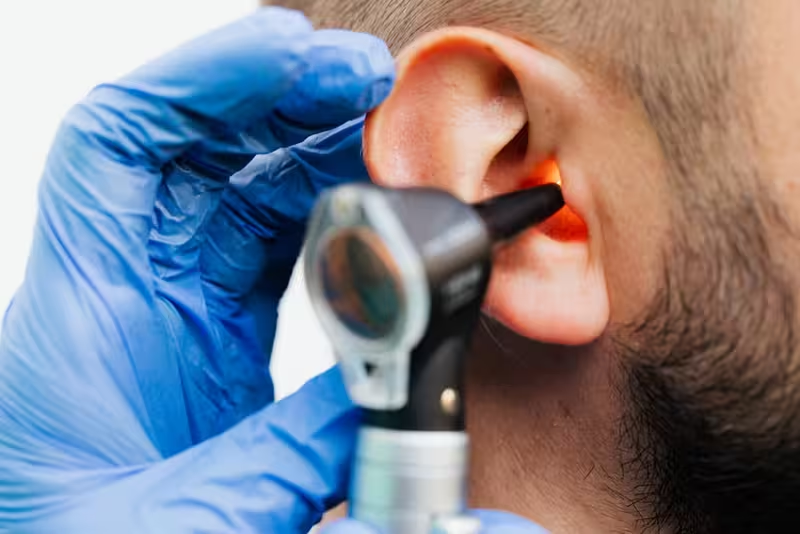
Microsuction is frequently preferred because it offers direct visual control and does not introduce water into the ear canal, which can be beneficial for people with recurrent ear infections or a history of perforated eardrum. Several GP surgeries and NHS clinics have reduced traditional syringing services in favour of safer, more precise techniques, and private providers can often offer microsuction sooner. Concerns such as the risk of driving wax toward the eardrum or irritation from irrigation fluid have led many clinicians to recommend microsuction in appropriate cases.
Clinical Benefits in Plain Terms
By using magnification and a controlled suction, microsuction reduces the risk of complications such as further impaction or accidental perforation, and avoids leaving moisture in the canal. It is particularly suitable for people with sensitive ear canals, those who use hearing aids or those with a history of ear surgery, and many patients value the faster symptom relief and reduced anxiety compared with older irrigation methods.
Comparing Microsuction and Ear Syringing
Many local GP surgeries no longer provide ear syringing, in part because it is less safe than microsuction. Possible complications from irrigation include ear infection, worsening hearing, tinnitus, perforation of the eardrum and further impaction where wax is pushed against the eardrum. As a result, more patients are seeking microsuction for ear wax removal. The increased demand has meant NHS microsuction services may have longer waits, so some people choose private clinics to access treatment sooner.
You do not necessarily need to wait months for microsuction. To save time, consider a private appointment. Visit our booking page and you could have your wax blockage addressed within days.
28 Fascinating Facts About Hythe
- The Hythe Town Hall: Hythe Town Hall, built in 1890, features a distinctive clock tower and serves as a venue for local events and council meetings, reflecting the town's civic pride.
- The Oldest House in Hythe: The Old House, dating back to the 15th century, is one of the oldest surviving buildings in Hythe and showcases traditional timber-framed architecture.
- Hythe's Annual Venetian Fete: Hythe hosts an annual Venetian Fete, a vibrant event featuring illuminated boats, live music, and fireworks, celebrating the town's maritime heritage.
- The Hythe and Dymchurch Railway: The Hythe and Dymchurch Railway is a narrow-gauge railway that runs along the coast, providing scenic rides and a nostalgic experience for visitors.
- The Historic Cinque Ports Association: Hythe is one of the original members of the Cinque Ports, a historic confederation of coastal towns that played a significant role in England's maritime history.
- The St Leonard's Churchyard: The churchyard of St Leonard's Church contains many historic graves, including those of notable local figures, reflecting the town's long-standing heritage.
- The Hythe Festival: The Hythe Festival is a biennial celebration of local arts, culture, and community spirit, featuring performances, exhibitions, and workshops.
- One of the Least Commercialised Seaside Towns in Kent
Hythe has managed to retain its small-town charm and historical integrity, avoiding the overdevelopment and modernisation seen in many other coastal towns. Its peaceful seafront, traditional High Street, and slow pace of life continue to attract those seeking a more authentic and relaxed English seaside experience. - The End Point of the Elham Valley Railway
The Elham Valley Railway once connected Hythe to Canterbury, operating from 1889 until its closure in 1947. It played a crucial role during both world wars, transporting military personnel and equipment. Remnants of the railway line, such as old embankments and bridges, are still visible in the surrounding countryside. - Microsuction Ear Wax Removal In Hythe
If you’re looking for the best ear wax removal clinic in Hythe, you found it. Hearing First Hythe is at the Hythe Clinic. You can click here to Book Microsuction Ear Wax Removal Hythe. - Part of the Saxon Shore
Hythe was historically included in the Saxon Shore, a network of Roman forts and settlements established to defend Britain’s eastern and southern coasts against Saxon raiders. The area’s strategic importance continued into the medieval period, shaping its identity as a Cinque Port and defensive stronghold. - The Martello Towers
Martello towers were built during the early 19th century to defend against potential Napoleonic invasion. Several of these small, round forts can still be seen along the Hythe coast, some of which have been converted into homes or used for storage, preserving their military heritage in a modern context. - St Leonard’s Tower is Over 100 Feet Tall
The massive stone tower of St Leonard’s Church dominates the skyline of Hythe and contains a rare ring of eight bells. Dating back to Norman times, the tower was likely constructed for both religious purposes and as a defensive lookout over the Channel. - The Royal Military Canal is 28 Miles Long
Constructed between 1804 and 1809, the canal was intended to slow down any French land invasion. Though it was never used in battle, today it serves as a tranquil waterway ideal for walking, canoeing, and observing diverse wildlife along its tree-lined banks. - Hythe Was Once an Island
Geological and historical evidence suggests that in ancient times Hythe was surrounded by marshland and tidal inlets, effectively isolating it as a small island. Over centuries, silting and land reclamation connected it to the mainland, drastically altering its geography and economic focus. - Hythe Has a Unique Microclimate
Due to its location near the sea and protection by the North Downs, Hythe often experiences milder winters and warmer, drier summers than inland parts of Kent. This microclimate has made it a favoured spot for retirees, walkers, and those seeking a healthier coastal lifestyle. - Old Fire Station is Now a Restaurant
Hythe’s former fire station has been transformed into a distinctive eatery, blending original architectural features such as the tall engine bay doors and red brickwork with modern interior design. It stands as a testament to the town’s creative repurposing of historic buildings. - It Was Bombed During the Blitz
Although not a primary target, Hythe sustained damage during WWII bombings due to its proximity to strategic military sites. Several bombs fell on or near the town, damaging homes and public buildings, and leaving a visible mark on its architectural evolution. - Hythe Beach is a Mix of Shingle and Sand
The town’s beach is largely shingle above the high tide mark but reveals stretches of sand at low tide. This mix makes it ideal for a range of activities from paddling and beachcombing to sea fishing and kite flying, with breathtaking views of the Channel. - Historic Inns Date Back to the 14th Century
Hythe’s inns and public houses, such as The White Hart and The King’s Head, offer centuries of history within their timbered walls. Many served travellers and smugglers, and still retain medieval cellars, crooked beams, and fireplaces that tell tales of their colourful pasts. - The Town Has Roman Roots
Archaeological digs around Hythe have uncovered Roman-era artefacts including coins, ceramics, and roofing tiles. These finds suggest that the area was inhabited or used by the Romans long before it became a medieval port and Cinque Port stronghold. - Hythe’s High Street is Largely Independent
Unlike many towns dominated by large retail chains, Hythe’s High Street is filled with family-run shops, artisan bakeries, antique dealers, and quirky boutiques. This gives the town a strong sense of identity and a personal shopping experience that draws visitors year-round. - Close Ties to Sandgate and Folkestone
Hythe forms a coastal trio with neighbouring towns Sandgate and Folkestone, all of which share historical ties, cultural events, and community projects. Together, they offer a rich tapestry of attractions, from castles and military history to art festivals and beach activities. - Hythe Was Once a Major Salt Producer
Salt was a valuable commodity in medieval England, and Hythe’s tidal marshes were ideal for its extraction. Salt pans and salterns near the coast provided income and trade opportunities, adding to the town’s wealth as part of the Cinque Port system. - Military Road Was Built for Efficiency
Built by the War Office in the 19th century, Military Road offered a direct connection between the School of Musketry and the coast. Its straight, wide design remains in use today and is a reminder of the town’s longstanding military significance. - Hythe Hill Offers Panoramic Views
The elevated land to the north of the town, often referred to as Hythe Hill or the escarpment, provides sweeping views over the town, the marshes beyond, and the English Channel. It’s a popular spot for dog walkers, photographers, and nature lovers alike. - The Crypt is Open to the Public Seasonally
St Leonard’s ossuary crypt, filled with thousands of neatly stacked bones, opens seasonally to visitors. It offers a unique glimpse into medieval attitudes toward death and burial, and has fascinated historians and tourists for generations. - Hythe Is a Filming Location
Hythe’s unspoilt High Street, charming architecture, and coastal scenery have made it a popular filming location for documentaries, period dramas, and even international productions. Its atmospheric streets are ideal for evoking England’s historic past.
Transport Options and Routes to Hythe Clinic from Nearby Areas
Patients travel to Hythe using private cars, local buses and rail links via nearby stations. If you will travel by public transport, check timetables before your appointment so you can time your arrival; local buses commonly run direct services from Folkestone and surrounding villages to Hythe town centre. For visitors from rural communities a short taxi from the nearest station or bus hub is a popular choice, and clinic staff can advise on the closest stops or ranks when you confirm your appointment.
Travel Planning Tips
Factor in extra time for peak travel periods or local events, and consider arranging for someone to accompany you if severe earwax blockage is causing discomfort; a companion can help with parking, transport and collecting aftercare items while you remain with the clinician.
Best Choices for Longer Journeys
For longer trips, combine rail or bus travel with a short taxi leg from the station to avoid parking difficulties while keeping journey time reasonable. Trains to nearby hubs are regular and local taxi firms provide short transfers straight to the clinic entrance.
Arrival Micro-Guidance
If you travel by taxi, ask the driver to wait nearby in case you need help returning to the vehicle after treatment, particularly if you experience temporary dizziness or light-headedness following a procedure for significant wax impaction.
Practical Note
Bring a small bag with essentials such as medication, spectacles and any hearing aids to make the immediate post-procedure period more comfortable and to ensure you can follow aftercare advice without delay.
Further Information and Resources
You can find more details about ear wax removal in Hythe with Hearing First here.
Accessibility Summary
The clinic is set up with accessibility in mind and is located on the ground floor.
Level access is provided throughout to make entry and movement easy for all visitors.
Getting Ready for Your Appointment: What to Bring and Avoid
To help the appointment run smoothly, bring photographic ID if requested, a list of your medications and information about any previous ear issues; this supports the clinician in assessing whether microsuction is suitable. Do not insert cotton buds or other objects into your ear before attending, as these can change the position of wax or create soft blockages that complicate removal. If you use hearing aids, bring them so the clinician can check fit and function after treatment. Preparing these items in advance shortens appointment time and helps ensure a safer, more comfortable microsuction experience.
Pre-Visit Checklist
- Bring a current list of medications and any recent ear-related diagnoses so clinicians can confirm suitability and note any necessary precautions for microsuction.
- Do not use ear drops on the day unless the clinic has specifically advised you to do so, because some drops can alter wax texture and affect the chosen removal technique.
- If you have had recent ear surgery or suffer from vertigo, inform the clinic ahead of time so your appointment can be arranged with suitable allowances and staff support.
- Wear comfortable, non-restrictive clothing and avoid strong perfumes; a calm, ventilated clinic environment helps reduce discomfort for sensitive patients.
- Plan your return journey if you will be travelling alone, as brief balance disturbance can occur after ear canal manipulation and clinicians may suggest a short rest before you leave.
How to Book an Appointment
Because demand is high, private ear wax removal is offered by appointment only. You can book an ear microsuction appointment here, or use the booking button displayed on this page:
Other Local Clinics
If you would like alternative options, consider the clinics listed nearby:
Aftercare Advice, Monitoring and Recommended Follow-Up
After microsuction, clinicians usually perform a short re-check to confirm the canal is clear and there are no residual particles. Advice may include keeping water out of the ear for a brief period, watching for signs of infection such as increased pain or discharge, and returning promptly if hearing does not improve as expected. When necessary, patients are advised about timing for routine hearing checks or further treatment if wax recurs. Tailored aftercare helps reduce the chance of recurrence and supports ongoing ear health for people using private ear wax removal services.
Signs to Watch for After Treatment
- If you experience brief dizziness immediately after the procedure, sit quietly for a few minutes and ask staff for help leaving the clinic; most episodes settle quickly but should be reported before you go home.
- Keep any prescribed drops or medicines strictly as instructed and attend recommended review appointments to make sure the ear canal remains healthy after microsuction.
- Monitor for increasing pain, unusual discharge or worsening hearing, as these may indicate infection or another issue that needs prompt clinical review.
- Avoid swimming and submerging your ears in baths for a short period as advised, since water can introduce bacteria to a recently cleared canal and increase infection risk.
- If you use hearing aids, have them checked after microsuction to ensure they fit properly and are not trapping residual wax which could reduce their performance.
On-Site Parking Availability
There is ample free parking on site for patients attending the clinic.
Practical FAQs for Visitors to Hythe
People frequently ask about likely appointment length, safety, suitability for children and whether an initial GP assessment is needed. Typical answers explain the expected duration, reassure that microsuction is safe when performed by trained clinicians, and indicate situations where a GP review or medical referral may be appropriate. This FAQ-style information helps prospective patients prepare and reduces routine telephone enquiries that could delay booking for those with pressing earwax-related concerns.
Frequently Asked Questions
Q: Is microsuction painful? A: Most patients report only slight pressure or mild discomfort; clinicians will stop if you report significant pain. Q: Can children undergo microsuction? A: Some clinics treat older children, but suitability depends on the child’s ability to stay still and cooperate during the procedure.
If you still have questions, the clinic asks prospective patients to contact reception for clarification about whether microsuction is appropriate, any contraindications such as an active ear infection, and whether a GP referral is required ahead of booking a private ear wax removal appointment at the Hythe CT21 site.
Hearing First Hythe
Sun Ln,
URL: https://www.hearingfirst.co.uk/book-ear-wax-removal-near-me/book-microsuction-ear-wax-removal-hythe/
Nearby Bus Stops and Public Transport
Nearest Bus Stops to Hearing First Hythe
- Douglas Avenue, approximately 0.1 miles from Hearing First Hythe. View this bus stop on Google Maps. Walking directions from Douglas Avenue to Hearing First Hythe.
- Old Prospect Road, approximately 0.1 miles from Hearing First Hythe. View this bus stop on Google Maps. Walking directions from Old Prospect Road to Hearing First Hythe.
- Saltwood Care Centre, approximately 0.2 miles from Hearing First Hythe. View this bus stop on Google Maps. Walking directions from Saltwood Care Centre to Hearing First Hythe.
- Mill Road, approximately 0.3 miles from Hearing First Hythe. View this bus stop on Google Maps. Walking directions from Mill Road to Hearing First Hythe.
- Quarry Road, approximately 0.3 miles from Hearing First Hythe. View this bus stop on Google Maps. Walking directions from Quarry Road to Hearing First Hythe.
- Red Lion Square (Stop A), approximately 0.3 miles from Hearing First Hythe. View this bus stop on Google Maps. Walking directions from Red Lion Square (Stop A) to Hearing First Hythe.
Nearest Rail, Tube and Tram Stations to Hearing First Hythe
- Sandling, approximately 1.6 miles from Hearing First Hythe. View this station on Google Maps. Walking directions from Sandling to Hearing First Hythe.
- Westenhanger, approximately 2.7 miles from Hearing First Hythe. View this station on Google Maps. Walking directions from Westenhanger to Hearing First Hythe.
- Folkestone West, approximately 3.0 miles from Hearing First Hythe. View this station on Google Maps. Walking directions from Folkestone West to Hearing First Hythe.
Stops and stations are ordered by straight-line distance from the destination using Google Places coordinates. Place and walking-direction links are provided by Google Maps.