Private microsuction earwax removal in Hastings TN34 — child-friendly waiting area, book appointment
Article Changed on 31/07/2026 17:22
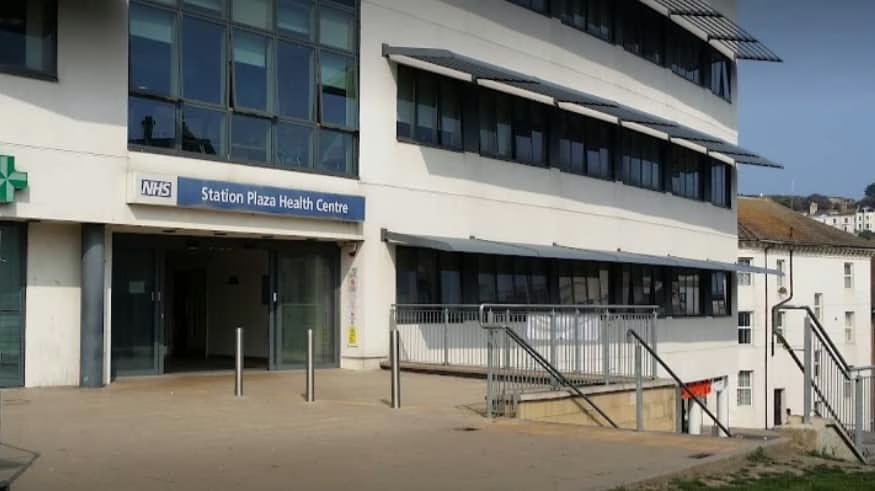
The Hastings microsuction service is located in Station Plaza Health Centre, immediately beside Hastings station, with parking close to the entrance, bays for blue-badge holders and step-free access into the building. A passenger lift is available and its cabin can accommodate a wheelchair or larger mobility aid, supporting safe arrival and transfer for people with limited mobility.
Clinician-Led Microsuction Close to Hastings Station
The private microsuction service operates from a central clinic near Hastings rail links, staffed by HCPC-registered audiologists and ear care practitioners who use magnified visualisation to manage cerumen safely. Families value the waiting area designed for children, reassuring staff and concise pre- and post-procedure briefings that make aftercare and recurrence prevention clear for carers. Clinicians employ a low-noise suction unit together with high-resolution endoscopes or video otoscopes to remove compacted wax under direct vision, which often restores hearing immediately and reduces the chance of canal trauma. The clinic aims to offer appointments that accommodate school and working schedules, same-week availability when possible, paediatric appointments, limited domiciliary visits and tailored care for hearing aid users and post-operative ears. Book via the online diary to view clinician availability, or call reception if you need mobility help or advice about anticoagulant medication before attending.
Patient-Focused Care Pathway
Treatment follows established ear health pathways, with pre-assessment triage, informed consent and an aftercare plan designed to reduce complications and future impaction. Safety checks and straightforward explanations help anxious children and first-time patients to feel at ease with microsuction. Clinical records document decisions to support continuity with GPs and ENT teams where referrals are necessary. The service performs audits and gathers patient feedback to maintain consistent standards and encourage ongoing professional development in cerumen removal and paediatric techniques.
How to Find the Hastings Microsuction Clinic
The clinic is situated at Station Plaza Health Centre, a short walk from Hastings rail station, making it convenient for residents and visitors arriving by train or bus. Enter Station Approach TN34 1BA into mapping tools or route planners to locate the entrance. The central position benefits patients travelling from St Leonards, Ore or Hastings Old Town, with station signage directing visitors from the forecourt. Local buses and taxi ranks provide practical alternatives for those who prefer not to drive. Many patients travel from towns such as Battle and Bexhill because microsuction is a specialist, clinician-delivered procedure not always provided by GP practices. If you use a mobility scooter or need step-free access, check the clinic contact page and call ahead to arrange assistance if required.
Details to Have Ready When Booking
When booking, provide a concise ear-related medical history: previous ear surgery, known perforations, recurrent infections and any medications that affect bleeding risk. Let the clinic know if you use hearing aids or have implanted devices, and state any mobility or communication requirements so appropriate preparations can be made. For children, include the child’s age and any developmental needs so a clinician experienced in paediatric ear care can be scheduled. Accurate information at booking enables clinicians to plan safely, reduces delays and lowers the chance of same-day rescheduling.
Fees, Refunds and What the Price Covers
Published Payment Methods
- Credit cards
- Debit cards
- Contactless or NFC payments
Payment information may change. Confirm prices, insurance eligibility and accepted methods directly with the provider. Place attributes are provided by Google Maps.
Clinic fees are published on the booking page and typically include the clinician assessment, the microsuction procedure, a short post-treatment hearing check and aftercare guidance. When both ears require attention a combined fee is commonly offered rather than separate charges per ear, and any extra time needed for complex removal is confirmed before treatment starts. Refunds or partial refunds follow the cancellation policy shown at booking; cancelling within the permitted window usually entitles you to a refund subject to any administration charge listed. If the clinician cannot complete treatment safely on the day because of findings such as active discharge or acute infection, they will explain next steps and charges will reflect the portion of service provided in accordance with clinic policy.
Other Nearby Clinics
Alternative clinics within reach of Hastings include the following services:
- Surbiton: Private Microsuction Ear Wax Removal, KT6
- Hythe: Private Microsuction Ear Wax Removal, CT21
- Ashford: Private Microsuction Ear Wax Removal, TN24
Reception Process and Initial Clinical Assessment
Research Catalogue Results for Ear Wax Removal
- The auricular cough reflex: lateralization, prevalence, procedural determinants, and the role of examiner handedness. - van de Loo J, Mayer M, Sharaf K, Eckel H, Jansen L, Klussmann JP, Luers JC., 2026.
- High-definition otoscopic device for humanitarian mission: how i do it. - Lechien JR, Maniaci A, Kipsang MJ, Kibor M, Vaira LA., 2025.
- Use of Castor Oil in Dermatology: A Narrative Review. - Girdler K, Cabatu A, Olds H, Potts GA., 2026.
Source: Europe PMC. These are bibliographic matches, not personalised medical advice or an endorsement of a treatment.
At reception staff will check your identity and take a brief ear history to identify red flags such as recent discharge or previous ear surgery, which could alter the intended approach. A clinician will perform a visual inspection with an otoscope or video otoscope to assess the degree of cerumen and canal shape, then outline the microsuction technique, likely duration and what sensations you may experience so you can give informed consent. Appointments are efficient but unhurried; the suction element frequently takes 15 to 30 minutes, depending on wax type and visibility. Accessibility needs are recorded at booking so the team can assist on arrival where necessary. When accompanying a child, the clinician will describe paediatric-friendly strategies and the extent of parental participation to support cooperation and comfort during treatment.
Pre-Procedural Safety Checks
- Medication review including anticoagulants and topical agents, because some drugs can affect bleeding risk and inform timing of safe intervention.
- Recent ear symptoms and any history of perforations or surgery, which determine whether microsuction is appropriate or whether ENT referral is required first.
- Visual inspection of the ear canal, to determine if wax obstructs the tympanic membrane view and whether suction under direct vision is feasible.
- Hearing aid usage and condition of earmoulds, enabling clinicians to plan device-friendly handling and check for debris around fittings after removal.
- Child developmental or behavioural considerations, so appointment length and paediatric techniques can be adapted to reduce anxiety and improve cooperation.
Pre-Appointment Preparation Checklist
- Bring hearing aids and related accessories, enabling the clinician to inspect device-related wax issues and advise on maintenance after removal.
- Confirm booking details and the clinician’s specialism, particularly if you need a paediatric or post-operative ear appointment so the correct expertise is arranged.
- Plan travel with extra time for station crowds, parking delays or mobility assistance to reduce stress on the day.
- Note any ear pain, discharge or recent respiratory infections and inform reception so the team can triage before your visit.
- Keep emergency contact details available and tell staff if you have a history of fainting or severe anxiety during medical appointments so reasonable adjustments can be planned.
How to Prepare for Your Appointment
Avoid self-cleaning with cotton buds and do not start new ear drops on the day unless instructed by a clinician. If you have already used over-the-counter softening drops, tell reception when booking so the clinician can judge whether to proceed or delay briefly to allow softening to take effect. Bring a current list of medications, as blood-thinning drugs may influence risk assessments. Hearing aid users should bring devices with spare batteries so the clinician can check earmoulds. For children, bring a favourite toy and arrive a little early to allow settling in the family seating area, which helps the clinician complete microsuction safely and with minimal distress.
Evidence and Safety: Microsuction Versus Syringing
Specialists often regard microsuction as a safer, more controlled method for cerumen removal compared with traditional syringing, especially for fragile or post-operative ears. Because microsuction avoids introducing water to the canal, it reduces the risk of post-procedural infection, transient vertigo and exacerbation of a perforation. Working under direct visualisation lowers the likelihood of pushing wax deeper, a recognised issue with irrigation. For hearing aid wearers and those with recurrent impaction, microsuction frequently provides faster, more thorough clearance. With many GP practices withdrawing syringing on safety and funding grounds, patients increasingly seek private microsuction services that follow current best-practice and training standards.
Reasons to Prefer Microsuction Over Syringing
Microsuction is a clinician-performed technique using gentle suction under direct visual control, favoured because it reduces the risk of forcing cerumen further into the canal. Unlike syringing, it does not introduce water, thereby lowering the chance of infection, dizziness or eardrum damage. Audiologists commonly recommend microsuction for hearing aid users, patients with perforations or recurrent wax problems, since it enables immediate assessment and precise removal.
- Safer option for fragile or perforated eardrums and post-operative ears
- Quick recovery with an immediate hearing check after the procedure
- Well suited to hearing aid users, avoiding water-based cleaning
If your GP no longer provides syringing, private microsuction is a timely, evidence-informed alternative. Book an appointment if you suspect wax blockage, persistent hearing loss or tinnitus related to cerumen.
Clinical Indications for Microsuction
- Post-operative ears after procedures such as tympanoplasty or mastoid surgery, which need careful handling and avoidance of irrigation.
- Hearing aid users with debris around earmoulds, where targeted visual removal is more effective than irrigation.
- Those who have had dizziness or infection following syringing, for whom a water-free, visually guided technique is preferable.
- Individuals with recurrent wax build-up, where clinician-led microsuction reduces the likelihood of repeated impaction and ongoing hearing issues.
- Patients with known perforations or thin tympanic membranes, where introducing water would raise infection risk and could worsen symptoms.
Travel Tips, Clinic Access and Local Links
The clinic is a short, well-signed walk from Hastings station via Station Approach, making rail travel straightforward for patients from neighbouring towns. For drivers there is complimentary on-site parking with designated disabled bays close to the entrance. Local bus routes and taxi ranks are a short walk away, offering sensible alternatives for visitors who prefer not to drive. Many patients travel from Bexhill, Rye and rural East Sussex villages because the clinic provides clinician-led microsuction that some GP services do not offer. If you plan to arrive by mobility scooter or require step-free access, call reception in advance so staff can provide arrival instructions and arrange any necessary assistance.
Public Transport and Arrival Advice
If travelling by train, allow an extra five to ten minutes to purchase a return ticket and walk from the platform to the clinic entrance; this helps keep appointments on time. People who feel unsteady due to vertigo or ear discomfort should consider travelling with a companion or by taxi for the return journey. Hearing aid users should bring their devices and spare batteries so clinicians can check fit and clear any debris from earmoulds, which often restores device performance immediately. Bring a comfort item for children to help reduce anxiety while waiting in the family-friendly seating area.
Frequently Asked Questions About Earwax and Microsuction
Common queries include whether microsuction is painful, how long effects last and whether hearing aids can be worn afterwards. Microsuction is generally well tolerated because clinicians work under direct vision using gentle suction to minimise discomfort. Results vary by individual, but many people remain clear for months; cerumen production differs so maintenance visits may be necessary. Hearing aids can normally be refitted once the clinician confirms the canal is clear and there is no irritation or discharge. If you have a perforation or recent ear surgery, discuss this at booking so the safest approach is chosen. For recurrent wax, clinicians can recommend personalised intervals to reduce repeat interventions.
Arrival Expectations
On arrival reception will verify your details and take a short ear health history. A clinician will perform a brief visual check using an otoscope or microscope, describe the microsuction technique and request consent. The full appointment usually takes 15 to 30 minutes depending on the degree of impaction, and many patients report immediate symptom relief. If you require parking assistance or have mobility needs, flag these at booking so staff can support you on arrival. Walk-ins are reserved for urgent cases; to ensure a clinician with paediatric skills for children, booking in advance is recommended.
Follow-Up and Preventive Recommendations
Clinicians often advise scheduled professional checks for individuals prone to wax build-up, especially hearing aid users or frequent swimmers. Avoid regular self-cleaning with cotton buds as this typically pushes wax deeper and increases impaction risk. If recurrent blockage occurs, schedule maintenance appointments at intervals recommended by your audiologist to reduce emergency visits and keep hearing aids performing well. The clinic provides written aftercare on the day and staff are available by phone for brief questions about recovery or the need for further review.
Aftercare Advice and Warning Signs to Watch For
Many patients experience immediate reduction in fullness and clearer hearing after microsuction, but clinicians will give specific post-procedure instructions to minimise complications and recurrence. Try to keep the ears dry for around 24 hours if possible, avoid inserting cotton buds or other objects into the canal and follow any prescribed topical treatments.
- Contact the clinic promptly if you develop severe pain, persistent bleeding, new or worsening hearing loss, or foul-smelling discharge, as these could signal infection or another complication needing urgent review.
- Transient tinnitus or mild discomfort can occur and typically resolves within a few days.
For people with recurrent wax production, clinicians can recommend review intervals or domiciliary visits when mobility is restricted.
Disabled Access
Published Accessibility Features
- Wheelchair-accessible entrance
Accessibility details are provided by Google Maps. Contact the location to confirm individual requirements.
The treatment rooms are on the ground floor and level access is provided for visitors.
Accessibility Features, Disabled Parking and Level Access
Car Parks Near Hearing First Hastings
- UK Parking Enforcement Limited, approximately 0.0 miles from Hearing First Hastings. View on Google Maps.
- YourParkingSpace, approximately 0.2 miles from Hearing First Hastings. View on Google Maps.
- Solo Motorcycles Only, approximately 0.1 miles from Hearing First Hastings. View on Google Maps.
Parking information and place links are provided by Google Maps. Check restrictions and charges locally.
Accessibility is integral to the clinic environment, with level access to consulting rooms and a lift that accommodates most wheelchairs and wider mobility aids. Disabled parking bays are located close to the entrance to reduce transfer distance and staff have basic manual handling awareness to assist while respecting patient dignity. The building includes accessible toilets, clear circulation routes and seating for those who need frequent rests, and clinicians can schedule longer appointments when additional explanation or support is required. Let reception know at booking if you need assistance unloading from a vehicle or prefer a ground-floor appointment so the team can allocate resources and meet you at the nearest drop-off point.
Driver and Carer Advice
- If you require physical assistance for transfers, notify reception at booking so the clinic can allow a little extra appointment time and make space for safe transfers.
- For electric vehicle drivers, public rapid chargers near the station are limited so consider charging at home beforehand or allow time to walk to a charger if needed.
- Plan extra travel time during commuter peaks or local events to avoid stress and ensure punctual arrival.
- For mobility scooter users, check the lift dimensions with reception in advance to confirm fit and arrange pre-booked assistance if necessary for safe entry and exit.
- Use the disabled bays opposite the main entrance and the marked drop-off point to reduce walking distance to treatment and waiting areas.
Measures for Children
- Parents may stay with children during the procedure, which supports reassurance and a positive experience immediately after microsuction.
- Distraction methods, including age-appropriate conversation and guided breathing, are used to help many children remain still during the brief procedure.
- Appointments are planned to minimise waiting for younger patients, allowing clinicians to work at a calm, reassuring pace when treating delicate ear canals.
- Clinicians experienced in paediatric care use simple language and confirm understanding before starting to ensure cooperation and safety.
- There is a child-focused waiting area with toys and suitable seating designed to ease anxiety and keep families comfortable while they wait.
Interesting Facts About Hastings
- Hastings Pier – Reborn from Ashes
Originally opened in 1872, Hastings Pier suffered a major fire in 2010. Following significant restoration it reopened in 2016 and won the RIBA Stirling Prize for architectural excellence. - Famous for Fossils
The cliffs around Hastings are rich in Lower Cretaceous fossils, attracting palaeontologists and beachcombers interested in ancient remains. - Jack in the Green Festival
Each May Day, Hastings celebrates the Jack in the Green Festival with Morris dancing, parades and a leafy ‘Jack’ figure in a colourful expression of local folklore. - Home of the UK’s Largest Beach-Launched Fishing Fleet
Fishing boats are still launched from the shingle beach by tractor or winch, a distinctive practice that has survived for centuries. - The Net Shops
Hastings is known for its tall, black wooden net shops, which were used historically to dry fishing nets and remain a rare local feature. - A Town of Three Parts
Hastings comprises the historic Old Town with narrow lanes and independents, the Victorian town centre and the newer St Leonards-on-Sea area developed in the 19th century. - Hastings Was One of the Cinque Ports
In medieval times Hastings was a key Cinque Port, supplying ships and sailors to the Crown in return for privileges such as tax relief. - Site of a German U-boat Surrender in WWI
During the First World War, a German U-boat surrendered off Hastings’ coast, a dramatic and unusual event in British waters. - St Clements Caves and Smugglers Adventure
Carved into sandstone cliffs, these caves were once used by smugglers and are now a family attraction with interactive displays. - Hastings Castle – William the Conqueror’s First in England
Built by William the Conqueror after the 1066 invasion, Hastings Castle began as a timber fortress and was later rebuilt in stone; ruins still overlook the sea today. - Birthplace of Early TV Experiments by John Logie Baird
John Logie Baird carried out some pioneering television demonstrations in Hastings during the 1920s, helping to advance early broadcasting technology. - A Victorian Seaside Favourite
In the 19th century Hastings became a fashionable resort, with grand hotels, promenades and pleasure gardens catering to holidaymakers. - Pelham Crescent and St Mary in the Castle
This elegant Georgian crescent carved into the cliff is overlooked by St Mary in the Castle, now used as a cultural venue and performance space. - Hastings Museum & Art Gallery
The museum holds diverse artefacts, including one of the UK’s notable Native American Plains collections, thanks to a benefactor who lived in the American West. - A Hub for Smugglers
During the 18th and early 19th centuries Hastings was infamous for smuggling, with caves and cliff passages used to hide goods such as tea, brandy and tobacco. - A Haven for Artists and Creatives
More recently, Hastings has become popular with artists, writers and musicians attracted by its scenery, community and more affordable living than nearby Brighton or London. - Blue Reef Aquarium
Located at Rock-a-Nore, the aquarium showcases local marine species, sharks and rays, making it a popular family destination. - Home to the Hastings International Chess Congress
The town hosts one of the world’s longest-running chess tournaments, which has welcomed grandmasters including Kasparov and Karpov. - The Battle of Hastings Didn’t Happen in Hastings
Contrary to the name, the 1066 Battle of Hastings took place about six miles inland at the town now called Battle, though Hastings remains linked to the Norman Conquest. - Alexandra Park – One of the Best in Britain
Alexandra Park covers 109 acres, features Victorian design, wildlife habitats and lakes, and has been recognised among the region’s top parks.
Map, Location and Directions to Ear Wax Removal Hastings East Sussex
You can get directions to our Microsuction Hastings East Sussex location on Google Maps. Enter your starting point and follow the suggested route to the clinic entrance.
%%JSLNAPSECTION_2_FCA4B660C9FDE49E%%
Arguably the most convenient ear wax removal clinic in Hastings
Don't just take our word for it, below are examples from our many five star reviews:
Map, Location and Accessibility Summary
Our Hastings clinic is positioned next to the main rail station at Station Plaza Health Centre, making it simple to reach by train or local bus. On-site parking includes designated disabled bays, level access and a lift suitable for wheelchairs. Using Google Maps or similar route planners gives precise directions to the clinic entrance, which is useful for first-time visitors and those travelling from nearby towns such as Bexhill or Rye.
- Accessibility: level access to ground-floor rooms, lift for wheelchair users and room for mobility aids
- Nearest public transport: Hastings station, short level walk to the clinic
- Parking: free on-site spaces, disabled bays opposite the entrance
How Quality Assurance Is Maintained
- Clinical records that document procedures, findings and aftercare instructions to support safe follow-up and any required referrals.
- Routine maintenance and cleaning logs for suction units and visualisation equipment to ensure reliable performance at each appointment.
- Regular training updates and competency checks so clinicians remain current with best practice in microsuction and ear assessment.
- Internal audits and patient feedback mechanisms that identify areas for service improvement and help sustain a high-quality patient experience.
- Clear escalation pathways to ENT consultants for complex cases, suspected infection or anatomical issues needing surgical assessment.
Nearby Locations Commonly Served
- Bexhill and Pebsham, where hearing aid users often prefer microsuction to protect earmoulds and receive professional cleaning.
- Rye, Camber and nearby coastal villages, where swimmers and seaside residents seek reliable care for wax and water-related ear problems.
- St Leonards-on-Sea and Ore, both within easy reach by public transport and benefiting from accessible clinic facilities.
- Northiam, Robertsbridge and inland communities, where patients value a timely private alternative to NHS ear services.
- Battle and surrounding rural hamlets, where the station-side location and parking make appointments accessible by car or train for families.
How to Book, Appointment Types and Prioritisation
All microsuction appointments are by advance booking so clinicians can be scheduled according to their specialisms, for example paediatric-trained practitioners, audiologists experienced with hearing aids, or clinicians used to post-operative assessments. The online diary displays clinician specialities and open slots, with same-week appointments shown where capacity allows. For urgent problems such as sudden hearing loss, ear pain with fever or new discharge, inform reception so your case can be prioritised and guidance provided on whether urgent ENT referral is required. Cancellation and payment terms are displayed during online booking; read these to avoid unexpected charges if your plans change. If you have a history of ear surgery or ongoing infection, mention this at booking so staff can allocate necessary equipment and expertise.
Information to Provide When Booking
Provide a concise ear-related medical history including prior surgeries, known perforations, recurrent infections and medications that affect bleeding to help clinicians plan safe microsuction. Note mobility and communication needs, and for children give age and any developmental or behavioural considerations so an appropriate clinician is assigned. If you wear hearing aids, state whether you will bring them so clinicians can plan for earmould inspection and maintenance. Clear disclosure at booking reduces the likelihood of rescheduling and ensures the correct clinical environment is prepared.
Public Transport and Arrival Recommendations
Arrive 5 to 10 minutes early to allow time for parking or buying rail tickets. The short level walk from the station platform helps people using mobility aids. If you intend to travel on public transport after treatment, allow a few extra minutes to ensure you feel steady, particularly if you experienced pre-appointment vertigo or discomfort. Hearing aid users should bring their devices and spare batteries so clinicians can check fit and any residual debris near earmoulds. When attending with children, bring a familiar toy or quiet headphones to ease short waits and keep youngsters calm.
Booking Procedures and Clinic Policies
Microsuction appointments must be booked in advance because clinicians are scheduled according to expertise. You can book online via the clinic booking page or call reception to arrange a suitable time. The online diary lists available slots and clinician specialities, enabling selection of a paediatric clinician, an audiologist skilled with hearing aids, or a clinician experienced with post-operative ears. Payment and cancellation conditions are shown during booking; review them to avoid unexpected charges for late cancellations. If you have ear pain, discharge or a history of ear surgery, disclose this when booking so staff can allocate suitable equipment and expertise. Same-week appointments are frequently offered, and urgent slots are prioritised for sudden hearing loss or painful blockages.
Areas Covered from Hastings Tn34
The Hastings microsuction clinic serves East Sussex and neighbouring areas, including Battle, Bexhill, Rye and smaller villages such as Ninfield and Catsfield. Many patients travel from coastal and inland communities because the clinic is accessible from the A21 and by rail, providing a private option where NHS waiting times may be prolonged. The service is suitable for people needing prompt relief from wax-related hearing loss, hearing aid users and parents seeking child-friendly care. With flexible appointment times and clear pre-visit guidance, the clinic supports patients from a wide area requiring clinician-led, evidence-based ear care without long delays.
Comparing Microsuction with Ear Syringing
Many GP practices have reduced or stopped offering ear syringing because of safety concerns and funding constraints; syringing may carry risks including infection, tinnitus, hearing loss, perforation and worsening impaction when wax is forced deeper. Microsuction avoids water and provides direct visual control, reducing those risks. Demand for microsuction has increased while NHS capacity can be limited, so private options offer faster access for patients who need clinician-delivered ear care.
You do not necessarily need to wait months for microsuction. Private appointments are available and often more convenient than expected. Visit the booking page to check clinician availability and you may be able to have your wax blockage cleared within days.
Book Your Microsuction Appointment, Quick Relief from Ear Wax Discomfort
The Hastings microsuction clinic provides services to patients from Battle, Hastings, Bexhill, Westfield, Pevensey, Brede, Seddlesfield, Ninfield, Catsfield, Hooe, Wartling, Herstmonceux, Rye, Camber, Peasmarsh, Robertsbridge, Burwash, Beckley, Northiam, Bodiam, Salehurst, Sandhurst, Hawkhurst, Hurst Green, Cripps Corner, Brightling, Eastbourne and across East Sussex.
What to Expect During a Microsuction Appointment
Microsuction is performed under direct visual control using a microscope or high-definition video otoscope with a fine suction probe; no water is introduced which lowers the risk of dizziness and infection. The clinician inspects the ear and eardrum, explains the planned steps and obtains consent before commencing. The suction tip is manoeuvred carefully to remove compacted cerumen without contacting the eardrum; many patients notice immediate improvement in hearing and relief of pressure. Some people experience brief tinnitus or mild discomfort which usually settles quickly. Aftercare includes keeping the ear dry for a short period, avoiding cotton buds and recognising signs of infection that would prompt a prompt return visit or onward ENT referral.
Typical Appointment Timeline
- Pre-assessment and consent, where the clinician records ear history, checks medications and explains the procedure in accessible language to ensure informed decision-making.
- Post-procedure inspection and a brief hearing check, together with written or verbal aftercare instructions and prevention advice tailored to hearing aid users or swimmers.
- The microsuction procedure itself, commonly 15 to 30 minutes, during which continuous visual control allows efficient removal while monitoring for any adverse response.
- Visual inspection using otoscopy or video endoscopy to assess wax position and plan a safe removal under direct vision.
- Discussion of follow-up options, including maintenance intervals or domiciliary visits for patients with mobility limitations or recurrent impaction.
Payment Methods and Insurance
The clinic accepts card and online payments for convenience. Private health insurance may cover microsuction when clinically indicated; check with your insurer before booking. If you have workplace or private reimbursement schemes, keep receipts and a record of the clinician’s details to support claims. The clinic can provide an invoice listing the service, clinician name and treatment date to assist with insurance or employer reimbursement.
Clinician Training, Credentials and Quality Measures
The clinical team includes HCPC-registered audiologists and ear care practitioners who engage in ongoing professional development in microsuction and ear pathology. The clinic follows evidence-based protocols, infection prevention procedures and local audit processes to maintain clinical standards. Equipment is serviced and maintained per manufacturer guidance and clinicians keep accurate records to support continuity of care. Triage is used for red-flag symptoms and referral pathways to ENT specialists exist where necessary. Patient feedback and outcome data inform service improvements and clinicians participate in peer review to sustain high-quality care.
Further Reading
Find additional details on ear wax removal in Hastings with Hearing First on Health Directory UK.
Parking
There is ample free on-site parking available for visitors.
Quick Answers to Common Questions
- Is the procedure painful? Most patients report minimal discomfort, because microsuction is controlled and performed under direct vision to avoid sensitive structures.
- Will I need follow-up? Some patients require a short review if wax is recurrent or if there are ongoing concerns such as discharge or post-operative changes.
- Can children have microsuction? Yes, clinicians experienced in paediatric care use child-friendly techniques, scheduling and distraction methods to keep young patients calm and safe.
- How long does it take? Most appointments are 15 to 30 minutes, though complex cases can require a longer slot.
- Do I need to stop using ear drops? Avoid starting new ear drops on the day unless advised; if you have softened wax with drops, tell the clinic so the clinician can decide whether to proceed.
Microsuction, Syringing and Clinical Safety Notes
Specialists increasingly favour microsuction over syringing because it provides direct visual control and avoids introducing water into the ear canal, which reduces the chance of post-procedural vertigo, infection or exacerbation of a perforation. Microsuction is well suited to hearing aid users, post-operative ears and people with recurrent impaction since the clinician can remove debris around earmoulds without wetting electronic components. With many surgeries reducing or stopping syringing for safety and funding reasons, patients now seek private clinician-led microsuction to obtain timely, evidence-informed care. Clinicians follow infection prevention measures and triage for red-flag symptoms that would prompt ENT referral rather than same-day microsuction.
When Microsuction Is Preferred
- Individuals with recurrent cerumen impaction, where clinician-led microsuction supports targeted removal and planning of maintenance intervals to avoid frequent emergency visits.
- Hearing aid users with debris around earmoulds, who benefit from a water-free visualised approach that avoids damage to device components and allows immediate inspection.
- Those who experienced dizziness or infection after syringing previously, for whom microsuction reduces the risk of a similar adverse reaction by avoiding irrigation.
- Post-operative ears following mastoid or tympanoplasty surgery, which require specialist handling and avoidance of irrigation that might compromise healing tissues.
- Patients with known tympanic membrane perforations or thin membranes, where introducing water would increase infection risk and could worsen symptoms, making microsuction the safer option.
Disabled Parking Availability
There are several disabled parking bays opposite the entrance
Private Microsuction Earwax Removal in Hastings Tn34
The private microsuction service in Hastings TN34 offers rapid access to appointments, experienced clinicians and a family-friendly waiting area at Station Plaza Health Centre. The clinical team includes HCPC-registered audiologists and ear care practitioners trained in microsuction and direct visualisation. The service emphasises safety, patient comfort and clear explanations so carers and parents understand the steps and aftercare.
The clinic is a short walk from Hastings station and provides complimentary on-site parking and disabled access, which is convenient for people travelling from Bexhill, Rye and surrounding East Sussex villages. Treatment uses a low-noise suction system with illuminated endoscopes to enable gentle, effective wax removal that frequently restores hearing immediately.
- Book online to check for same-week availability where offered, or call reception to discuss paediatric appointments or mobility requirements.
- This private clinic is competitively priced, suitable for hearing aid users and post-operative ears, and can provide a solution when syringing is not advised.
Video: Expectation During Ear Wax Removal
How to Book an Appointment and Our Booking Policies
Appointments for microsuction are by advance booking to ensure the appropriate clinician is allocated. Book online via the clinic booking page or call reception to arrange a suitable time.
- The online diary displays available slots and clinician specialities, enabling selection of paediatric clinicians, audiologists who work with hearing aids, or clinicians experienced with post-operative care.
- Payment and cancellation terms appear during booking; review them to avoid unexpected fees for late cancellations.
If you have ear pain, discharge or a history of ear surgery, tell reception when booking so staff can allocate suitable equipment and expertise. Same-week appointments are often available and urgent slots are prioritised for sudden hearing loss or painful blockages.
Booking Process and What to Expect
Appointments are by booking only and microsuction slots are scheduled to manage demand. Reserve a time online via the clinic booking page or call reception to speak with staff. Same-week appointments are commonly available; check the diary if you need urgent removal or require a clinician experienced with hearing aids.
- Choose a convenient appointment online or phone the clinic to confirm availability
- Bring hearing aids or a list of medications, and notify staff of any ear pain or discharge
- Arrive 5–10 minutes early for registration and a brief medical check
- The procedure typically takes 15–30 minutes and many patients notice immediate improvement
If you have a history of ear surgery, a perforated eardrum or recurrent infections, declare this when booking so an audiologist or suitably trained clinician can be assigned. Cancellation terms are shown on the booking page to help avoid unexpected charges.
Pricing, Cancellation Terms and What the Fee Covers
Fees are displayed on the clinic booking page and usually include the clinician assessment, the microsuction procedure, a post-procedure inspection and tailored aftercare advice. When both ears require treatment a combined fee is commonly offered, and clinicians will confirm any extra time needed for complex removal before proceeding. Cancellation and refund terms are set out at point of booking; cancelling within the permitted window typically entitles you to a refund subject to any stated administration charge. If the clinician cannot complete microsuction due to active discharge or other unexpected findings, they will discuss alternative plans and any charge will reflect the partial service provided in line with clinic policy and professional guidance.
Payment Methods and Insurance Reimbursement
The clinic accepts card and online payments for convenience and can provide an itemised invoice showing the clinician name, date and service to support private health insurance or workplace reimbursement claims. Check with your insurer beforehand about cover for audiology or microsuction, as policies vary; retain receipts and documentation if you plan to claim. For corporate schemes, the clinic can supply the necessary paperwork to help facilitate reimbursement when the service qualifies.
Clinic Accessibility, Disabled Parking and Level Access
Accessible design underpins the service, with level access to ground-floor treatment rooms and a lift that accommodates wheelchairs and wider mobility aids. Disabled parking bays are positioned opposite the clinic entrance to assist carers with transfers. Tell reception when booking if you need help unloading from a vehicle or prefer a ground-floor appointment to avoid steps. Staff receive basic manual handling awareness training and will assist where appropriate while maintaining dignity and comfort. The clinic layout provides wide doorways, clear sightlines and seating for those who need frequent rests. Accessible toilets are available in the health centre and clinicians can extend appointment times for additional explanation or history-taking when required.
Appointment Booking
Due to demand, private ear wax removal is by appointment only. You can book an ear microsuction appointment here, or use the button below to visit the booking page:
Aftercare and Signs to Watch After Microsuction
Most patients experience immediate relief from fullness and clearer hearing after microsuction; clinicians will give verbal and written aftercare instructions to reduce complications and recurrence. Keep the ear dry for about 24 hours if possible, avoid inserting cotton buds or other objects into the canal and follow any topical or prescription instructions provided. Transient tinnitus or mild discomfort may occur and generally settles within a few days. Contact the clinic promptly if severe pain, ongoing bleeding, new or worsening hearing loss, or foul-smelling discharge develops, as these could indicate infection or another complication requiring urgent review. For people with repeated wax problems, clinicians can advise review intervals or arrange domiciliary visits when mobility is limited.
What Happens During a Microsuction Procedure
Microsuction is a clinician-led procedure carried out under direct vision using a microscope or video otoscope and a fine suction probe. After confirming medical history and obtaining consent, the clinician inspects the ear canal, explains findings and sets out the planned approach. No water is used, which reduces the risk of dizziness and infection associated with irrigation. The suction tip is small and manoeuvred to remove compacted cerumen without contacting the eardrum. Many patients report immediate improvement, though transient fullness or mild tinnitus can occur and usually resolves. The clinician will provide aftercare advice, signs to monitor and discuss follow-up if residual debris or recurrent impaction is likely.
Preparing for Your Appointment: Useful Pre-Checks
Do not self-clean with cotton buds or other implements before the appointment, as this often pushes wax deeper and complicates removal. If you have used over-the-counter drops to soften wax, inform reception at booking so the clinician can decide whether to proceed or delay briefly to allow softening to be effective. Bring an up-to-date medication list, because anticoagulants or topical agents may influence clinical decisions. Hearing aid users should bring devices and spare batteries so clinicians can inspect earmoulds and advise on maintenance. For children, a familiar comfort item and early arrival to use the family-friendly waiting area can reduce anxiety and support a safe, efficient procedure.
Pre-Appointment Checklist
- Keep emergency contact details available and inform staff if you have fainted or suffered severe anxiety during examinations so reasonable adjustments can be made.
- Bring hearing aids, batteries and any earmould accessories so clinicians can check for device-related wax issues and demonstrate cleaning after removal.
- Confirm appointment time and the clinician’s specialism, particularly if you need a paediatric-trained audiologist or someone experienced with post-operative ears so the correct expertise is allocated.
- Note any current ear pain, discharge, recent respiratory infections or vertigo and tell reception so the team can triage suitability for same-day microsuction.
- Plan travel allowing extra time for station foot traffic, parking or mobility assistance to reduce stress and make arrival smooth.
Private Microsuction in Hastings Tn34, Family-Friendly Waiting Area and Easy Booking
Our private microsuction service in Hastings TN34 provides prompt appointment access, experienced clinicians and a waiting area designed for families at Station Plaza Health Centre. The team includes HCPC-registered audiologists and skilled ear care practitioners trained in microsuction with direct visualisation. The service emphasises safety, patient comfort and clear explanations so carers and parents understand what to expect and how to manage aftercare. The clinic is a short walk from Hastings station, with complimentary on-site parking and disabled access, making it practical for people travelling from Bexhill, Rye and nearby East Sussex villages. Treatment uses a low-noise suction system and illuminated endoscopes to enable gentle, effective wax removal that often restores hearing immediately. This private clinic is competitively priced, suitable for hearing aid users and post-operative ears, and can assist people previously advised that syringing was not appropriate. Book online for same-week availability where offered or call reception to discuss paediatric appointments or mobility needs.
Aftercare, Follow-Up and Common Post-Procedure Signs
Following microsuction the clinician will give clear verbal and written aftercare instructions, typically advising to keep the ear dry for 24 hours if possible and to avoid inserting objects into the canal. Transient tinnitus, mild discomfort or a feeling of fullness can occur and usually subsides within a few days. Contact the clinic promptly if you experience severe pain, ongoing bleeding, new or worsening hearing loss, or foul-smelling discharge, as these may indicate infection or another complication requiring urgent review. For patients with recurrent cerumen production, clinicians can recommend personalised maintenance intervals and consider domiciliary visits where mobility is limited, helping maintain hearing and reduce emergency consultations.
Routine Follow-Up Advice
Clinicians commonly suggest periodic professional checks for people prone to wax build-up, especially hearing aid wearers and those who swim regularly: scheduling maintenance every few months or at intervals advised by the clinician helps reduce urgent visits. Avoid habitual cotton bud use because it tends to push wax deeper into the canal; follow clinician guidance on safe ear hygiene and use preventive drops only under professional advice. The clinic remains contactable by telephone for brief recovery queries and will arrange follow-up if residual debris or ongoing symptoms are found during the initial visit.
Hearing First Hastings
Station Approach,
URL: https://www.hearingfirst.co.uk/book-ear-wax-removal-near-me/book-microsuction-ear-wax-removal-hastings/
Nearby Bus Stops and Public Transport
Nearest Bus Stops to Hearing First Hastings
- Marylebone Station (Stop N), approximately 0.1 miles from Hearing First Hastings. View this bus stop on Google Maps. Walking directions from Marylebone Station (Stop N) to Hearing First Hastings.
- Great Central Street (Stop M), approximately 0.1 miles from Hearing First Hastings. View this bus stop on Google Maps. Walking directions from Great Central Street (Stop M) to Hearing First Hastings.
- Marylebone Station (Stop P), approximately 0.2 miles from Hearing First Hastings. View this bus stop on Google Maps. Walking directions from Marylebone Station (Stop P) to Hearing First Hastings.
- Marylebone Station (Stop LA), approximately 0.2 miles from Hearing First Hastings. View this bus stop on Google Maps. Walking directions from Marylebone Station (Stop LA) to Hearing First Hastings.
- Old Marylebone Town Hall (Stop V), approximately 0.2 miles from Hearing First Hastings. View this bus stop on Google Maps. Walking directions from Old Marylebone Town Hall (Stop V) to Hearing First Hastings.
- Old Marylebone Road (Stop EU), approximately 0.2 miles from Hearing First Hastings. View this bus stop on Google Maps. Walking directions from Old Marylebone Road (Stop EU) to Hearing First Hastings.
Nearest Rail, Tube and Tram Stations to Hearing First Hastings
- Marylebone, approximately 0.2 miles from Hearing First Hastings. View this station on Google Maps. Walking directions from Marylebone to Hearing First Hastings.
- Edgware Road, approximately 0.2 miles from Hearing First Hastings. View this station on Google Maps. Walking directions from Edgware Road to Hearing First Hastings.
- Baker Street, approximately 0.3 miles from Hearing First Hastings. View this station on Google Maps. Walking directions from Baker Street to Hearing First Hastings.
Stops and stations are ordered by straight-line distance from the destination using Google Places coordinates. Place and walking-direction links are provided by Google Maps.