Health Directory UK – Find Clinic Locations, Services & Reviews
This Guide Changed on 13:22, 30 Nov 2025
Health Directory UK: Find clinics nearby, services and trusted reviews

Quick guide, how this directory can help you
Health Directory UK showcases checked clinic locations across England, Scotland, Wales and Northern Ireland, so you can promptly locate services such as microsuction, audiology and routine clinic appointments. We bundle practical details, patient feedback and booking links to let you compare providers by distance, accessibility and service type, making it simpler to pick the best option. Try the map to spot nearby clinics, or narrow results by treatment, opening hours and whether NHS referrals are accepted. Each profile highlights trust signals: clinician qualifications, CQC registration where applicable and disability access information. We publish patient reviews and external ratings to guide your judgement, and include contact details for phone or online booking. Need same-day care? Use the urgent appointments filter. Prefer a private clinic? Choose private providers via the service filter. This page walks you through searching, comparing and booking, and flags common services such as ear wax removal, hearing tests and ENT consultations, so you can find a provider that suits your needs.
What each listing will show you
Every profile gives a full street address, a directions link, parking notes, disabled access information and opening times, plus a clear booking button and a short summary of the clinician's credentials. You will also find recent patient reviews and any published pricing or NHS funding notes, helping you make a well-informed choice before you call or book online.

Speedy search tip
Begin with a postcode search, then refine with service and accessibility filters to shrink your results quickly; favourite a clinic to return to its profile in a single click.
Extra guidance
When a listing mentions audiology or microsuction, confirm whether the clinician is a registered audiologist or ENT practitioner, and check the clinic's infection control policies, particularly for ear and respiratory procedures.
How to search clinics by postcode, service and distance

Step-by-step search plan
- Open the map view to inspect junctions, car parks and public transport links visually, then visit the clinic profile to confirm opening times and whether online booking is offered.
- Sort by patient reviews or distance depending on whether you value experience or a short journey; sorting by recent reviews surfaces up-to-date patient feedback.
- Start with a postcode search to centre results around your address, then pick a radius in miles so you only see clinics within a convenient travelling distance; include public transport options if you do not drive.
- Apply accessibility filters if needed, for step-free access, wheelchair lifts and disabled parking, so you avoid locations that might present mobility barriers.
- Filter by service, for example microsuction, hearing tests or general practice, so results include only providers experienced in the treatment you need, saving time and removing irrelevant listings.
Working through these steps will shrink tens or hundreds of entries to a handful of suitable clinic choices. The directory works on mobile and desktop, so you can start from a phone and switch to a larger screen for planning routes. Always check the listing for parking notes and any peak-time restrictions before you set off, because some towns have short-stay limits near clinics.
Services and specialities covered by clinics
Common services you can expect
Health Directory UK organises services by speciality so you can find clinics offering audiology, ear wax removal by microsuction, ENT consultations, physiotherapy and diagnostics such as tympanometry and hearing assessments. Each service entry explains what happens in a typical appointment, how long it usually takes and whether any preparation is advised, for example avoiding ear drops before a microsuction slot if instructed. We also flag clinics that offer secondary care, like hearing aid fitting, tinnitus support and balance assessments, helping you locate multidisciplinary options more easily.
| Service | Typical duration | Notes |
|---|---|---|
| Audiology assessment | 30–60 minutes | Includes hearing tests, case history and follow-up advice; may require quiet room conditions |
| Microsuction ear wax removal | 15–30 minutes | Performed by trained clinicians, suitable when irrigation is contraindicated |
| ENT consultation | 20–40 minutes | Investigation of persistent ear, nose or throat symptoms, possible referral for imaging |
| Balance and vestibular testing | 30–90 minutes | Specialist equipment used; book at a clinic that lists vestibular services |
Accessibility, parking and premises information
Checks to do before you travel
Accessibility is important for appointments, so each listing flags disabled access, step-free entry, wheelchair lifts and nearby blue badge parking. Many clinics are on ground floors or sit within medical centres; others have limited parking and get busy at peak times. If you rely on public transport, look for listings that note the nearest station, bus routes and whether the route includes steep gradients that may be difficult with mobility aids. We recommend phoning ahead if you need extra help, such as a larger meeting room for a carer or staff to meet you at the entrance.
Visitor checklist
- If you have visual or hearing impairment, check whether staff provide large print forms, hearing loops or a quiet room for consultations, these services differ between clinics.
- Confirm wheelchair access and whether a lift is large enough for your mobility device, particularly for clinics on upper floors that list access but may have narrow lifts.
- Look for clear signage from the main road to the clinic entrance, this helps in shared buildings where multiple suites can be confusing.
- Check blue badge spaces and whether they are reserved or shared, and allow extra time for finding a space during busy periods or market days.
- Confirm public transport options and walking distance from the nearest stop, some clinics are a short walk from stations but the route may not be step-free.
A small caveat
Listings reflect information provided by clinic operators and independent checks; parking arrangements or temporary access works may change without immediate update, so call if access is critical to your visit.
Booking, appointment types and cancellation policy
How to book, and what to expect
Typical booking choices include online forms, phone lines and, at some clinics, same-day walk-ins. Check whether a GP referral is required for certain services, for example ENT consultations on some NHS pathways, and whether the clinic accepts private patients without referral. Many clinics offer an online booking button to reserve a specific clinician or time slot; if you prefer to speak, use the number on the profile to ask about preparation and likely appointment duration.
- Telephone booking is handy when you need to explain complex symptoms or arrange assistance on arrival, and reception staff can suggest the best appointment type and clinician for your needs.
- Contact the clinic directly for urgent worries to check same-day or next-day availability, and ask whether an on-call clinician handles acute problems.
- Online booking is often quickest for routine appointments, use the clinic's portal to pick a date and time, and check cancellation terms before confirming; some providers charge for very late cancellations.
- If you need to reschedule, see whether you can book the follow-up straight away to avoid long waits for specialist slots.
- Cancellation policies vary: read the clinic's terms, note any non-refundable deposits and give as much notice as possible to avoid fees and free the slot for someone else.
- If a GP referral is required, the listing will note this, and you should obtain the referral before booking to avoid delays or cancellations on the day.
Patient reviews, ratings and verification
How to read reviews and trust markers
Patient feedback gives insight into clinician manner, waiting times and perceived value. Our directory shows recent reviews alongside an overall score and flags verified feedback, confirmed by a booking reference or trusted third-party platforms. When reading reviews, look for remarks about clinician qualifications, clarity of explanation and whether follow-up care was arranged. Comments that mention specific procedures, such as microsuction ear wax removal or hearing aid tuning, are particularly helpful. We also display review counts so you can judge how reliable a rating is.
- Context matters: positive reviews that talk about short waits, clear communication and sensible aftercare are especially useful when comparing clinics.
- Use review extracts to form questions to ask when you call the clinic, for instance to confirm whether parking described in comments is still accurate.
- Negative feedback about an administrative hiccup should be weighed against comments on clinical expertise; consider how the clinic handled the complaint.
- Verified reviews are those confirmed by a booking reference or a third-party review provider, showing the reviewer actually attended the clinic and had the service mentioned.
- Recentness matters: reviews within the last 12 months are likelier to reflect current practice, look for clusters of recent feedback rather than single older entries.
Clinic locations by region and service coverage
How we organise regions in the directory
Listings are grouped by region and local authority so you can quickly see clinic density in cities and rural areas. Regional clusters often show where specialist services are available: larger cities tend to host audiology hubs and ENT centres, while smaller towns might offer basic microsuction and routine appointments. We indicate the number of providers per region and let you filter by county and postcode area, helping you decide if a trip to a neighbouring town is necessary for a particular specialist. For niche services like vestibular rehabilitation or paediatric audiology, the region filter helps you find the nearest centre of expertise.
| Region | Typical services | Travel notes |
|---|---|---|
| Greater London | Full range: ENT, audiology, microsuction, hearing aid centres | Good public transport, busy roads at peak times |
| South East | Mixed provision with specialist clinics in larger towns | Consider train links between hubs for specialist appointments |
| Midlands | Regional hospitals and private clinics, varying rural coverage | Car travel often faster than public transport in rural districts |
Qualifications, safety and regulation to look for
What to spot on a clinic profile
Clinics should list clinician qualifications such as BSc or MSc and registrations with the Health and Care Professions Council where relevant. For medical services, check for doctors with GMC registration and for regulated allied health professionals verify HCPC listings. The Care Quality Commission rating is an important trust signal for England, while Scotland and Wales use their own regulatory systems; we link to these registers when available. Infection control, equipment sterilisation and clear consent procedures are essential for close-contact services like microsuction or minor ENT treatments.
- Confirm that sterilisation and single-use consumables are used where appropriate, especially for ear and ENT instruments, to reduce infection risk.
- Check for CQC or equivalent regulator registration, which confirms the clinic meets national safety and governance standards for care and premises.
- Look for clinician credentials and membership of professional bodies, as these show ongoing training and adherence to practice guidelines.
- Ask whether the clinic has an adverse event policy and a clear pathway for escalation to secondary care if complications arise.
- Ensure consent and privacy policies are explained before treatment, and request a written aftercare summary if one is not provided routinely.
Costs, funding and NHS versus private options
How we display pricing information
We show estimated fees when clinics supply them, for example typical charges for microsuction ear wax removal or private audiology assessments. Some clinics accept NHS-funded referrals while others operate privately; listings make clear whether NHS pathways are supported and whether insurance is accepted. Cost drivers include clinician seniority, diagnostic tests such as audiograms and any follow-up care. If price transparency matters to you, choose clinics that publish full fee schedules and deposit terms.
- NHS-funded appointments may need a referral and can have variable waiting times, so verify whether the clinic is integrated with local NHS services before booking.
- Look for clinics that provide a written estimate for care, including potential follow-up visits, so you can budget accurately.
- Private clinics usually list a consultation fee and any extra testing costs, such as full audiometry or hearing aid trials, letting you compare expected total spend.
- Insurance acceptance varies, confirm pre-authorisation steps with your insurer to avoid unexpected bills.
- Discounts for students, pensioners or block appointments are sometimes offered, so ask if price is a deciding factor.
Map links, directions and parking tips
Using maps and route planning
Each listing has a direct link to a maps service for step-by-step directions from your postcode. Map links include walking routes, driving times and public transport connections, and they point out nearby car parks, multi-storey facilities and possible on-street restrictions. For larger clinics near transport hubs, check for cycle storage or taxi ranks if you plan to use those modes. When planning, allow for likely waiting times and local traffic so you pick the best departure time for your appointment.
Practical directions checklist
- Confirm whether the clinic recommends a particular car park and whether it validates parking or offers a patient discount.
- Verify the exact entrance used for clinical appointments, some multi-tenant buildings have separate front doors and internal directions that a map may not show clearly.
- Check for temporary roadworks or local events on the day of your appointment, which can add substantial delay in busy areas.
- For stations, look for step-free access from platform to street when mobility help is required; not all nearby routes are fully accessible despite proximity.
- Consider public transport strike days, and plan alternative routes in good time to avoid last-minute cancellations.
Specialist clinics and services for particular conditions
Finding specialist care for your problem
Some clinics focus on conditions like chronic ear disease, paediatric audiology, tinnitus management or vestibular rehab. We tag those clinics with speciality labels so you can find a centre with the right experience rather than relying on a general practice. Specialist services often provide multidisciplinary teams, including ENT surgeons, audiologists and physiotherapists for balance disorders. For complex problems, ask whether the clinic has referral links with regional hospitals and whether they can co-ordinate outpatient tests, imaging and surgical reviews into a clear care plan.
| Speciality | Who it suits | Typical additional services |
|---|---|---|
| Tinnitus clinic | People with persistent ringing or noise perception | Cognitive behavioural support, sound therapy and hearing aid trials |
| Paediatric audiology | Children with suspected hearing loss | Play-based testing, family counselling and school liaison |
| Vestibular rehabilitation | Patients with dizziness or balance disorders | Physiotherapy-led balance programmes and home exercise plans |
Pick your ideal health clinic from our curated list of trusted providers, and you will be on your way to faster care and clearer next steps.

Ashford — Private microsuction ear wax removal, TN24

Barnet — Private microsuction ear wax removal, EN5
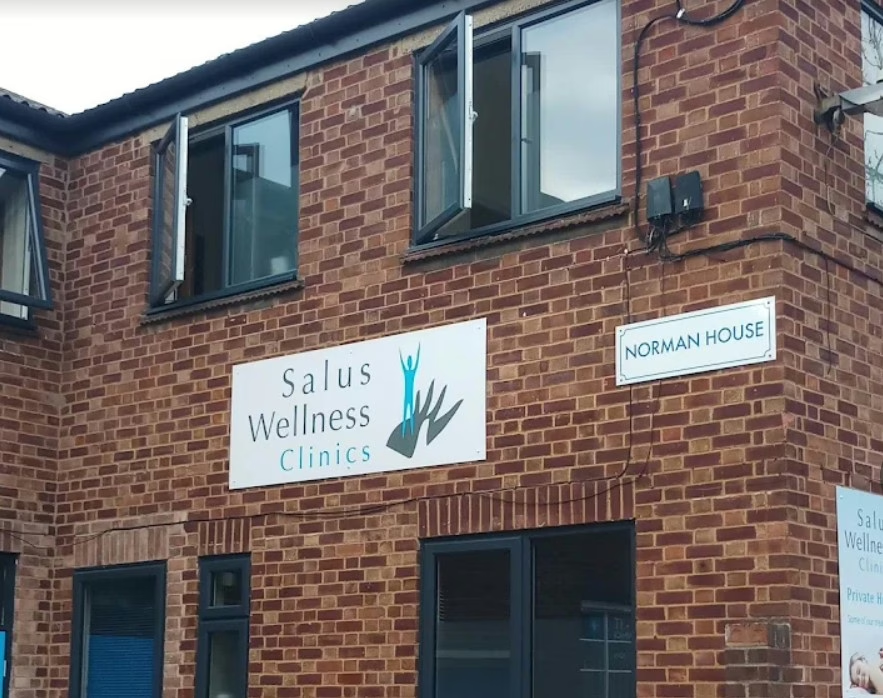
Cambridge — Private microsuction ear wax removal, CB2

Colindale — Private microsuction ear wax removal, NW4
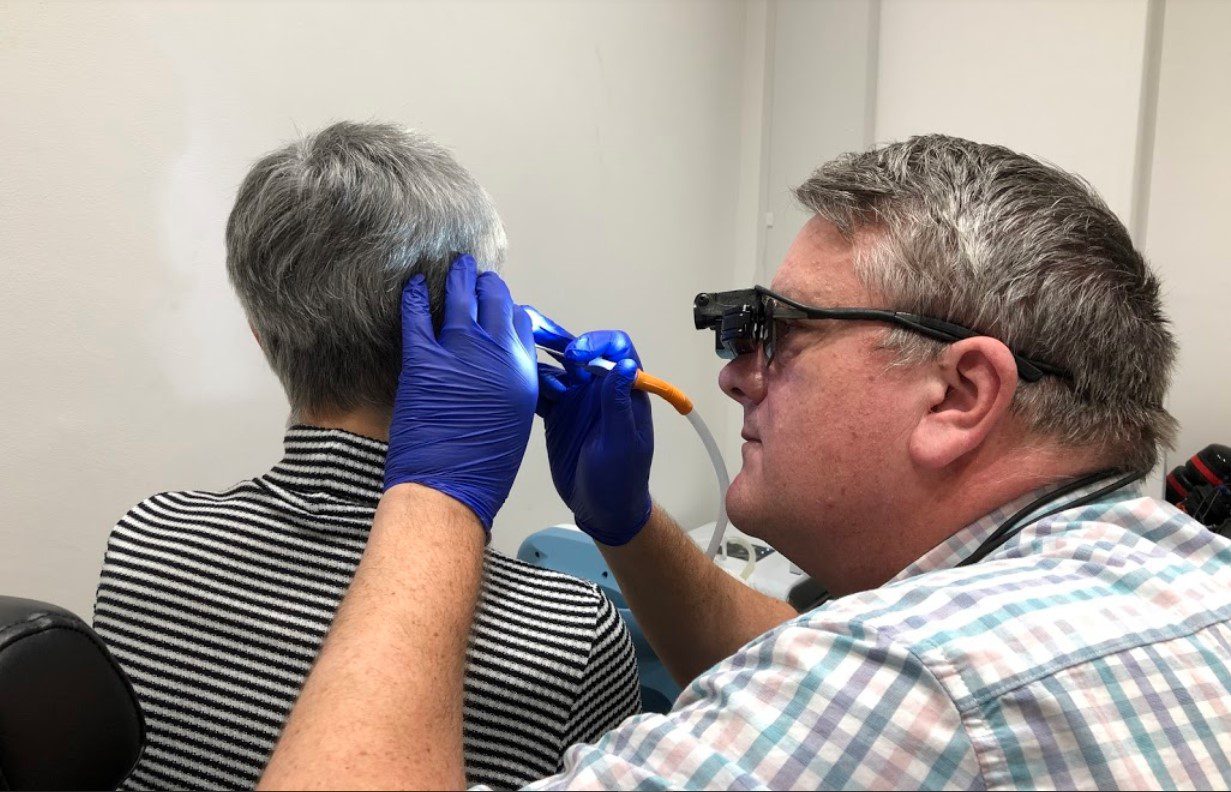
Ealing — Private microsuction ear wax removal, W5

East Finchley — Private microsuction ear wax removal, N2
Edgware — Private microsuction ear wax removal, NW4

Enfield — Private microsuction ear wax removal, EN1
Finchley — Private microsuction ear wax removal, North London
Hastings — Private microsuction ear wax removal, TN34
Hendon — Private microsuction ear wax removal, NW4
Hythe — Private microsuction ear wax removal, CT21
Kingston — Private microsuction ear wax removal, KT6
Mill Hill — Private microsuction ear wax removal, NW4
Milton Keynes — Private microsuction ear wax removal, MK2

Muswell Hill — Private microsuction ear wax removal, N2

Oxford — Private microsuction ear wax removal, OX2
Reading — Private microsuction ear wax removal, RG30
Surbiton — Private microsuction ear wax removal, KT6
Choosing the right clinic: essential questions before you book
Criteria to help you select a provider
Before you book, draw up a short list of questions about the clinician's qualifications, appointment length, aftercare and fees. Ask if the person named in the profile will be the one who treats you, and whether test results are explained during the visit or require a separate follow-up. Think about proximity, parking and transport, but balance convenience against specialist experience for complex issues. Use patient reviews and verified ratings as a guide, and call to confirm any detail that matters for your visit. If the clinic offers remote consultations, check whether a video or phone assessment is suitable for your initial review, or whether an in-person exam is needed for an accurate diagnosis.
- Will I get a written summary of the consultation and any aftercare instructions, this is particularly useful after procedures such as microsuction or minor ENT work.
- Who will see me, and what are their professional qualifications and registrations; ask for the clinician's name and title so you can verify credentials if necessary.
- Do you accept my insurance, and can you provide an itemised invoice suitable for claims; this helps avoid confusion and speeds reimbursement.
- Is follow-up included in the price, and who should I contact if symptoms persist or worsen after treatment; clinics should explain a clear escalation pathway.
- What is your cancellation policy and how late may I reschedule without a penalty, transparency here prevents unexpected charges and helps planning.
Micro-guideline
Bring a list of current medicines and any recent test results to speed the assessment; clinics value concise medical histories.
Further tip
If you are organising care for someone else, check the clinic's policy on carers attending and whether extra time is allowed for accompanying persons.
Final note
Picking a clinic is a balance of accessibility, cost and specialist skill; use the directory filters to match those priorities and make a choice that fits your clinical needs and personal circumstances.